Your Choice: Listen or Read
Coming to Minneapolis (Spring 1980)
I came into Minneapolis in the Spring of 1980 driving north on 35W in an old red van that rattled more than it rolled. I’d been on the road long enough to be startled when the skyline rose up in front of me — dotted with cranes and glowing with possibility, as if it had been waiting for me.
In the back of the van were my tools, a jumble of clothes, and one thing I protected like a relic: the Large Glass piece. It was the seed of the live art idea that had changed me at Cranbrook — the first version of the “life-support” works that would define my early years. Fragile, awkward, and irreplaceable, it sat wedged between toolboxes and blankets. I checked it at every stop. When I looked in the rearview mirror, I wasn’t just watching traffic — I was watching that piece survive the bumps.
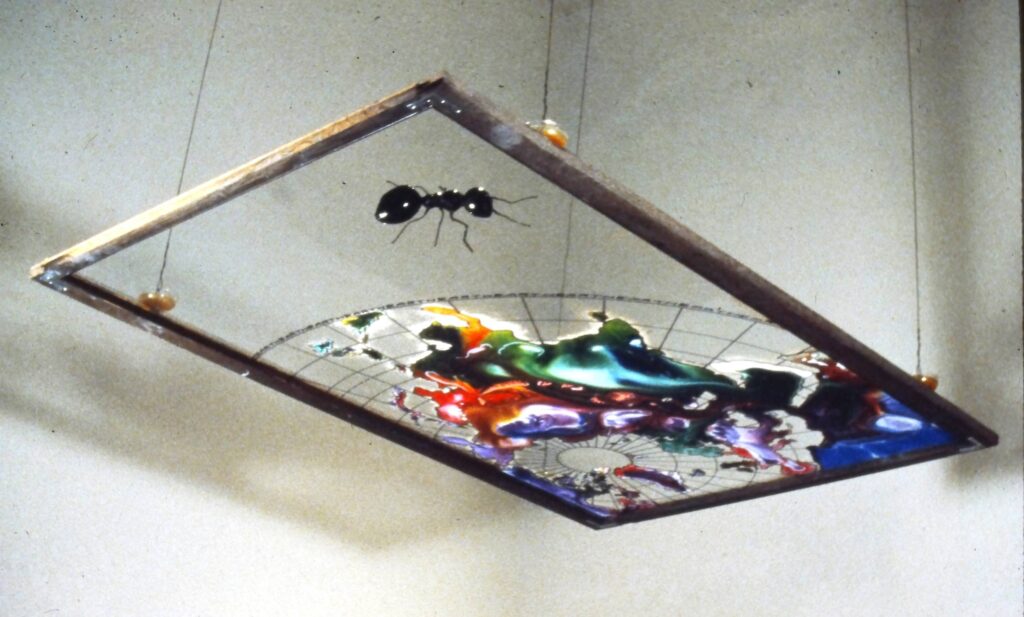
I didn’t land gracefully. Lynn couldn’t take me in; too much old history, too little space. For a while I stayed with Judith Roode, another early anchor at a moment when I had nowhere steady to land. The women of WARM steadied me in those first months and kept me from slipping through the cracks. My survival job — Home Maintenance Repair Service — kept me fed. I walked door to door with a homemade flyer, patched walls, installed sinks, and tried not to think too far ahead. The city was rough in places: someone threw a metal signpost through the front window of my van one morning — it felt like a personal violation. There were days I felt like the universe was testing both my patience and my sense of humor.
But under all of that, I knew why I had come.
A year earlier at Cranbrook, Siah Armajani had been the visiting artist. He watched me work, saw the way I worked with others, solved problems, and without ceremony told me, “If you ever come to Minneapolis, I’ll have work for you.” Artists make all kinds of promises. This one stayed in my pocket.
So one day, early in that Minneapolis fall, I climbed the stairs of the Martin Leather Building to see him. He was already a major figure in the Twin Cities, his bridge linking Loring Park to the Walker Art Center — a work that seemed to fuse sculpture, architecture, and ethics into one declarative form. I didn’t know what I expected. Maybe a polite conversation, maybe nothing.
But he remembered. And he kept his word.
He hired me.
Just like that, my Minneapolis life pivoted.
In later years, whenever people asked what it was like to work for Siah, I’d tell them the truth: I learned more about what it means to be an artist in that single year with him than in all my formal art education combined.
His studio filled the entire top floor of the Martin Leather building — raw, wide, humming with activity. Below it, on the third floor, his previous assistant, Phil, had a studio he rarely used. For a short time we shared this 1000 square foot studio. Then one afternoon he told me he was giving it up.
“It’s yours.”
No ceremony. No negotiation. The torch passed simply because I was there, working, showing up, doing what needed doing — and because Siah had opened the door.
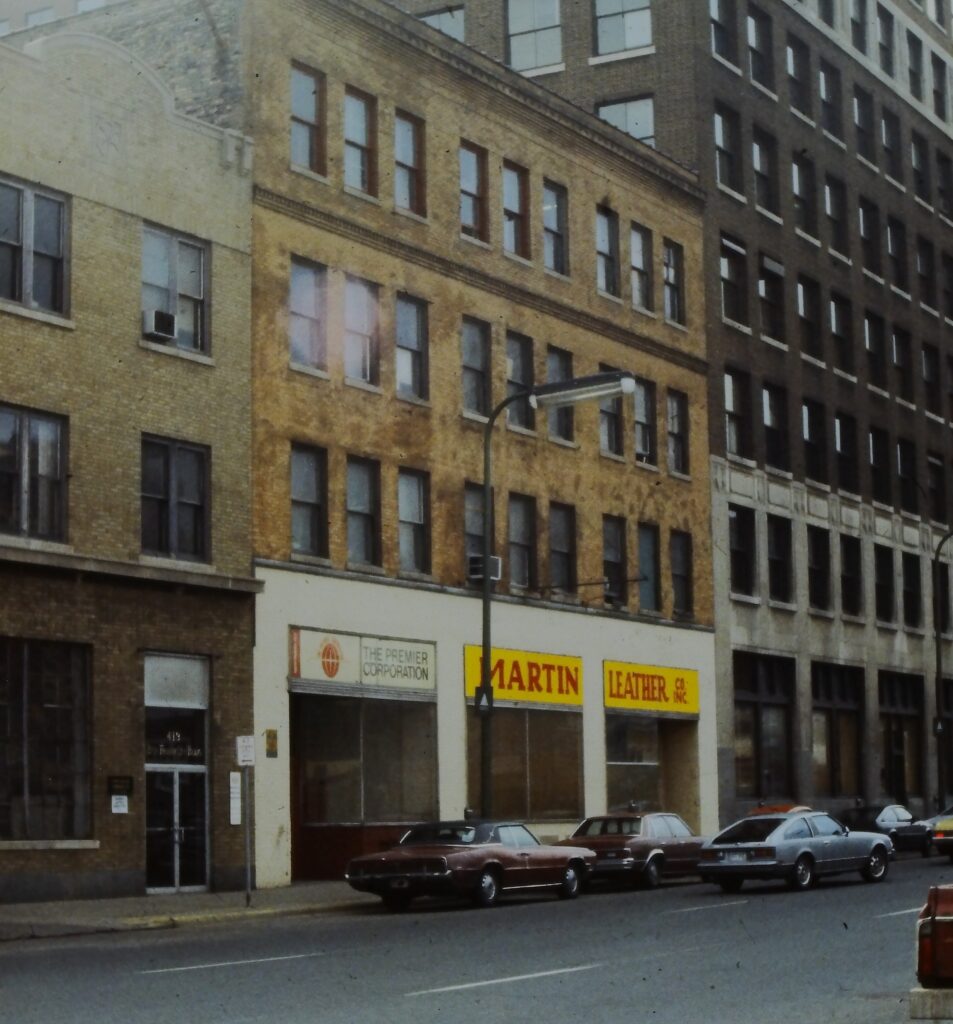
I remember unlocking that studio alone for the first time. Sunlight slanted through the old industrial windows. Dust hung in the air like fine powder. The floorboards creaked with history. Above me, Siah’s studio filled the building with its energy. Behind me, the Large Glass piece leaned safely against the wall, having survived the journey.
I stood in the center of the room and felt, for the first time since arriving, that I had a place — a real place — to begin.
Everything that would define my early work was waiting to happen in those walls. But that is another story.
This one ends with a key in my hand and the quiet knowledge that I had arrived.