Your Choice: Listen or Read
Ah, the things we do for art.
My first time working with live animals was at my graduate show at Cranbrook, and let’s just say it was a learning experience.
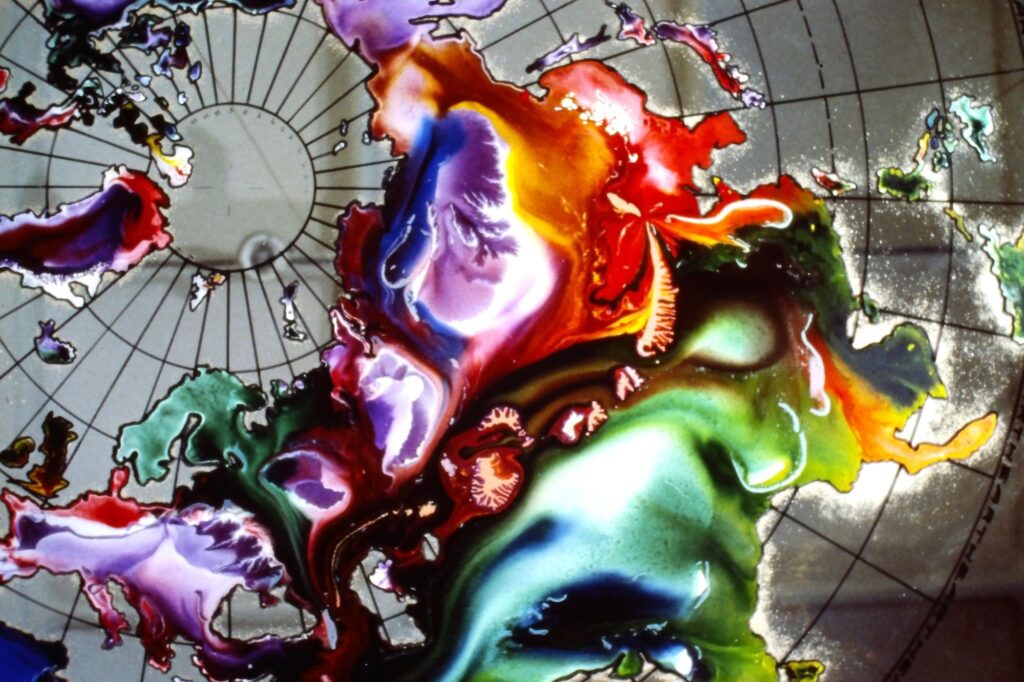
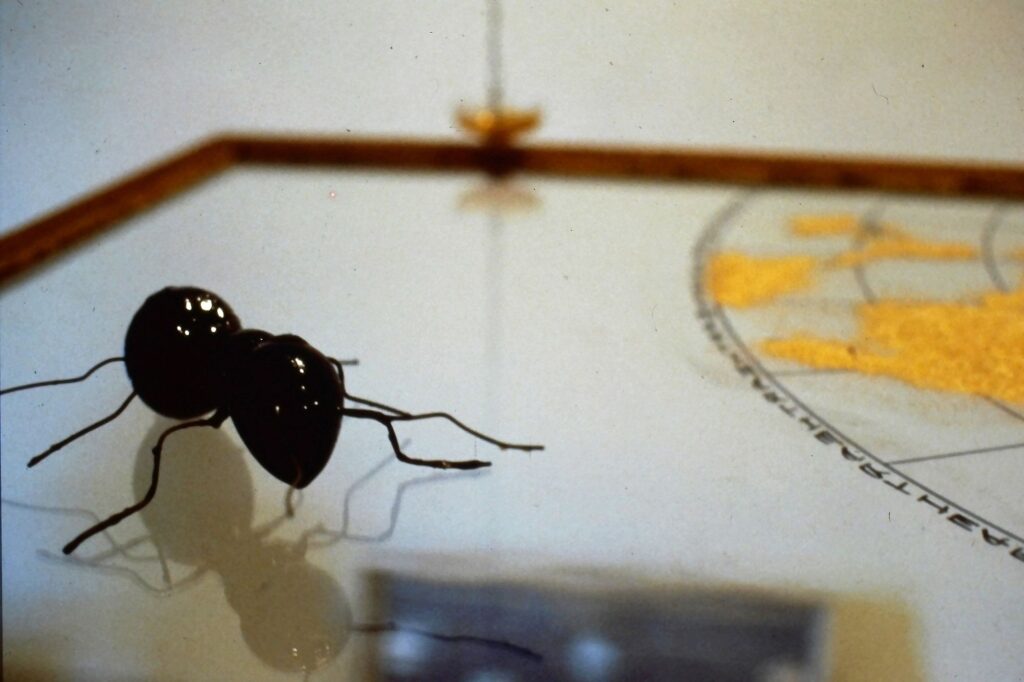
The centerpiece of my installation was a massive glass painting, suspended eight feet off the ground. Visitors would stand beneath it, peering up at the intricate world I had created. To bring it to life—literally—I introduced 500 California Harvester ants, giving them sand to dig in, food to eat, and water to drink.
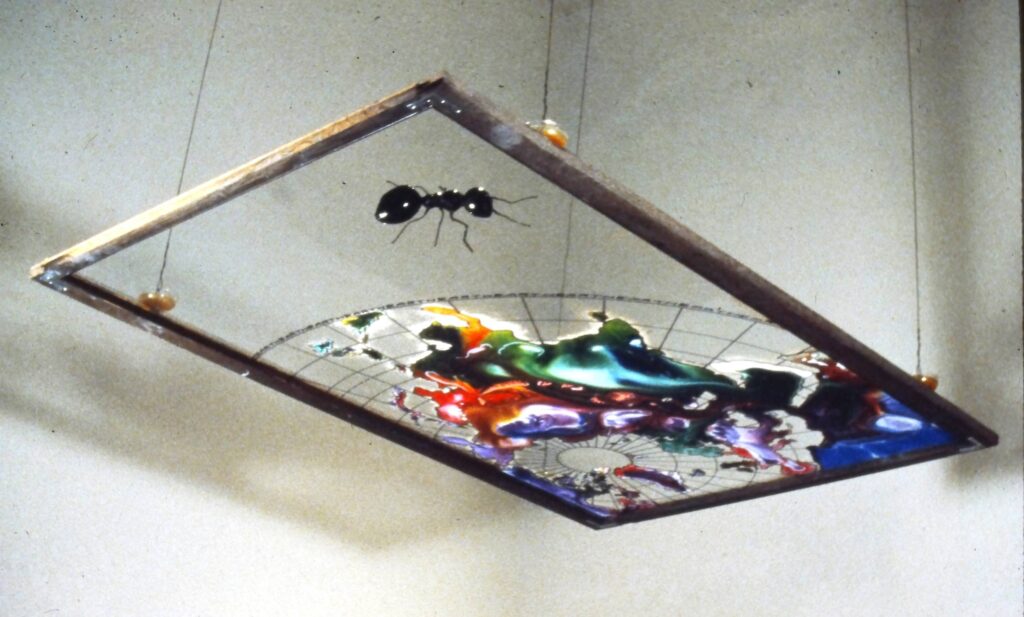
The ants arrived the morning of the opening, packed into a pill-sized container. 500 ants? In this tiny thing? It seemed impossible. But the moment I popped it open and shook them onto the glass, there they were—an army of tiny workers, spreading out across their new transparent world.
Now, I had made one tiny miscalculation. I had assumed that, like any reasonable creature, they’d reach the edge of the glass, glance down at the long drop, and think, Nope, not worth it.
I was wrong.
They marched right off the edge like tiny lemmings, plummeting to the floor, landing unharmed, and then happily scurrying off into the museum. At this rate, I’d have an empty installation before the doors even opened.
Cue panic.
I sprinted three blocks to the Cranbrook Science Museum, bursting in on the resident entomologist like a contestant on Survivor: Ant Edition. He calmly suggested I sprinkle cinnamon around the glass, as ants apparently despise cinnamon. Back at the museum, I made it rain cinnamon. The ants? Completely unfazed.
Back to the entomologist.
“Try mustard,” he said.
Mustard? At this point, I’d try interpretive dance if he thought it would help. I rushed back and squeezed a thick bead of mustard all around the perimeter of the glass.
Finally—success! The ants reached the edge, recoiled in disgust, turned around, cleaned themselves off, and got back to work rearranging the sand. Disaster averted.
Well, almost.
There was still one minor issue: mustard dries. After a couple of days, it became more of a mustard crust, and the ants… well, they resumed their great escape.
Oh, and I also had to sign a waiver swearing that my ants would not eat the Grant Wood painting in the adjacent gallery. You know, just in case they suddenly developed a taste for American Gothic.
And that, my friends, is how I stumbled into a 30-year career in live art installations.