Your Choice: Listen or Read
When I first crossed the gates of Cranbrook after three days on the road — the Grand Prix sagging under the weight of a canoe strapped to the roof — it was already night. The campus felt otherworldly in the dark, like I’d driven not into Michigan but into some ancient English estate where the past and future were trying to occupy the same space.
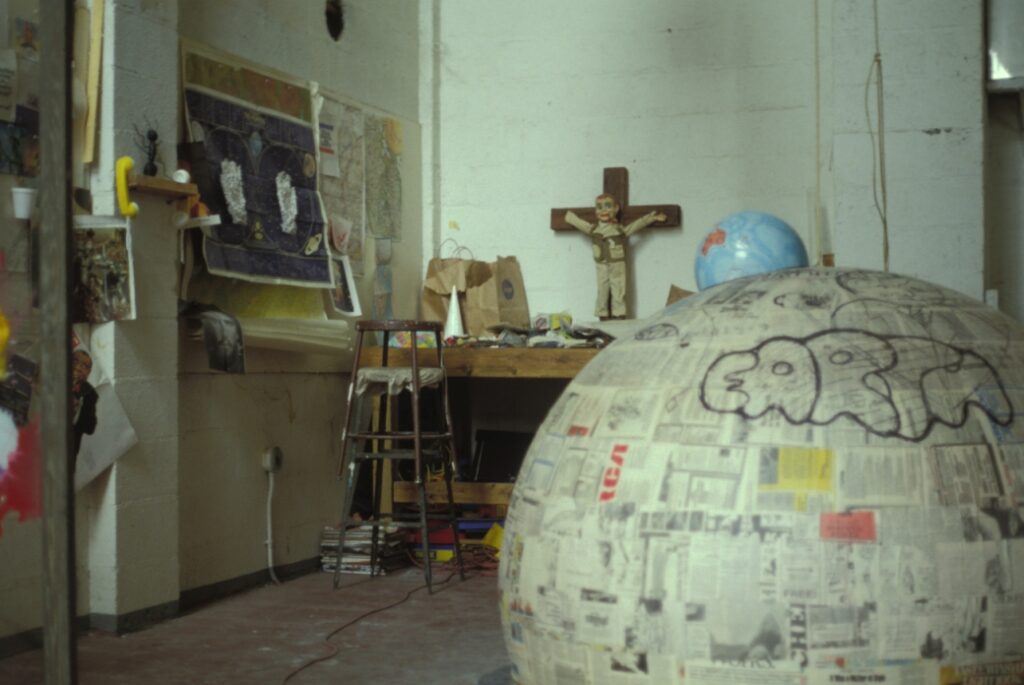
I asked someone where the sculpture department was, and they pointed toward a pair of massive oak doors. They looked like something from a medieval cathedral — eighteen feet tall, six feet wide, intricately carved, and completely without handles. They weren’t meant to be opened by someone like me. They were meant to be part of the myth of the place.
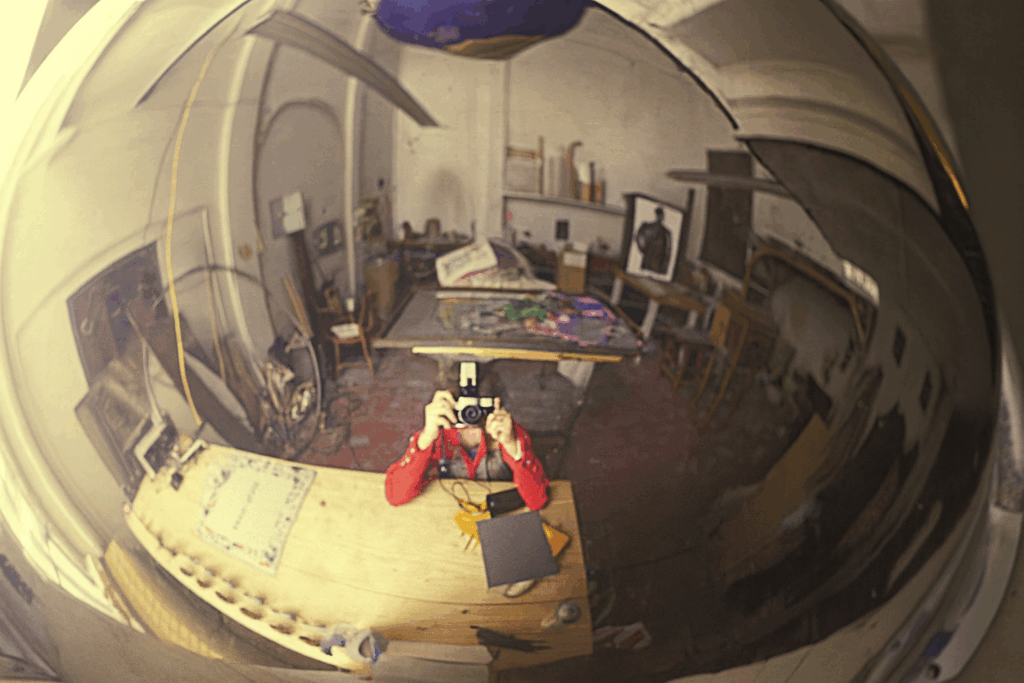
Still, I pushed.
To my surprise, the left door gave way with a deep, slow groan, and what lay beyond was absolute darkness. Not dim. Not shadowed. Black. A void with no horizon.
I took one step forward and immediately vanished downward.
Four feet — just enough to shock the body and scramble the mind. I landed hard but not injured. Mostly I was stunned. And then strangely grateful for the darkness, because it gave me permission to lie there without getting up.
As my eyes adjusted, the darkness softened into shapes — massive rafters overhead, soaring upward into what felt like infinity. Thirty feet high, at least. The space itself was nearly a perfect square, maybe thirty feet across, like a secret chamber carved into the architecture.
And suddenly, as if the room was whispering it to me, a sculpture emerged in my mind. A kinetic piece. Tall. Suspended. Moving with the slow gravity of breath. A work that could only exist in a room exactly like this one.
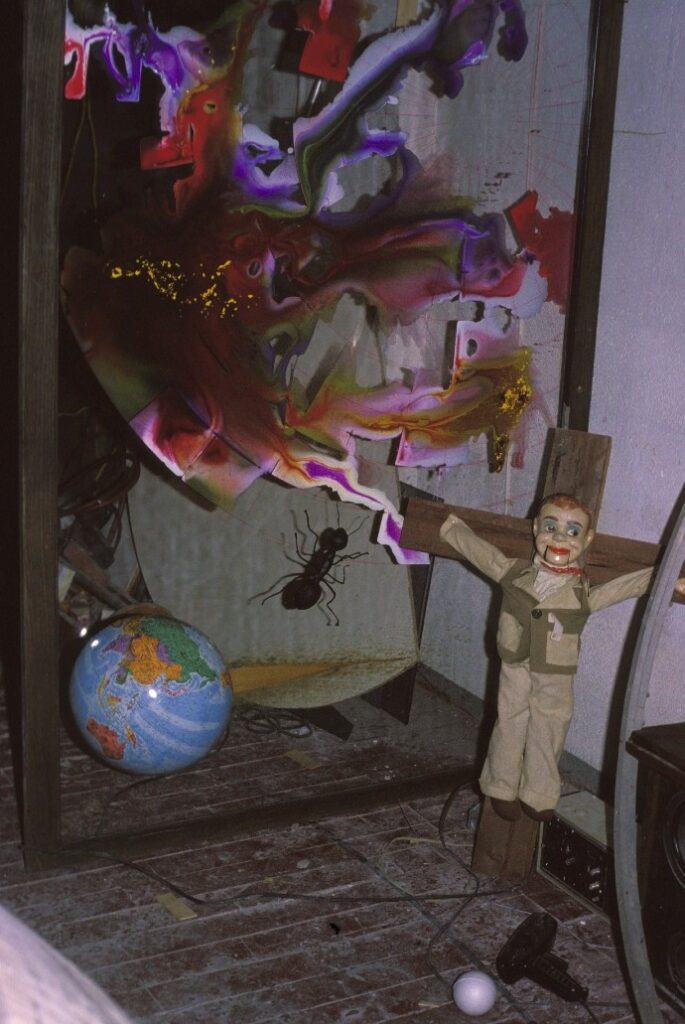
I lay on the cold floor for half an hour, designing it in real time, letting the space tell me what it wanted. It felt like an initiation — not dramatic, not mystical, but intimate, a private handshake between me and the place where I was supposed to become an artist.
The next morning I met Michael Hall, the head of the sculpture department. I told him the story — the doors, the fall, the darkness, the revelation — and I begged him for that studio.
I must have sounded half-crazy, or half-chosen. Either way, how could he say no?
Epilogue: The Studio’s Echo
Many years later — decades after that night in the dark, after Minneapolis, after the installations, the timelines, the love stories and heartbreaks — I found myself telling the story to Aribert Munzner.
We were sitting in his studio, surrounded by the cosmic whirlwinds of his paintings, the kind that feel like they’re half-myth, half-physics. He was ninety-four then, his memory flickering in and out like an old film projector, but when something delighted him, it came through with the full force of the man he had always been.
I told him about the giant oak door, the fall, the darkness, and the moment the room revealed itself like a cathedral built for one.
Ari’s eyes widened. A grin spread across his face — not polite, not nostalgic, but gleeful, almost boyish.
He slapped his palm on the table and said:
“We had the same studio!”
He was suddenly twenty again — not the elder sage of the California Building, not the painter of galaxies — but a young Cranbrook student discovering the world through art, just as I had.
For a moment, time folded in on itself.
Ari laughed again, softer this time, and said:
“That room makes artists.”
And for once, I didn’t argue.