Your Choice: Listen or Read
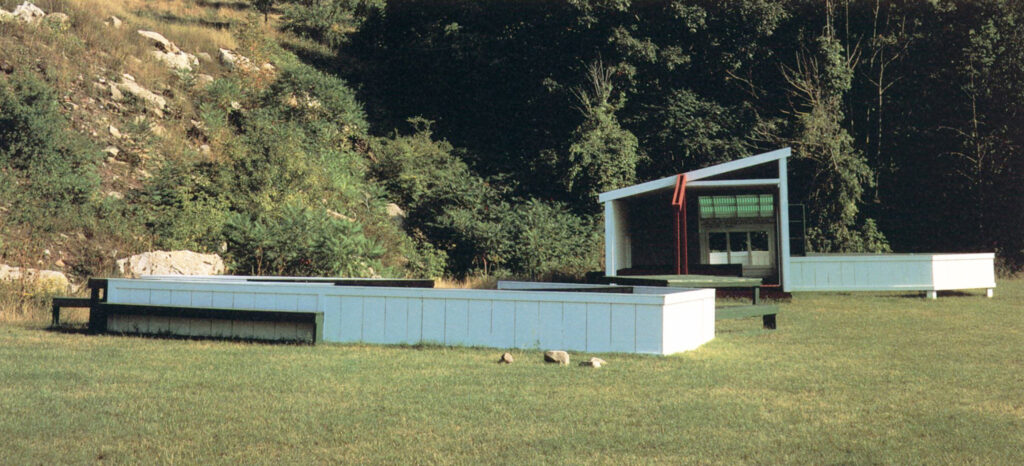
Art Park in the early 80s was already one of the country’s most revered sculpture parks — a cathedral of air, distance, and monumental ambition. We were there to install Siah Armajani’s piece, called the Meeting Garden. At A Park, installing Siah’s piece felt almost serene — spacious, beautifully grounded in the landscape, and unusually free of the chaos that so often accompanies public art installations.
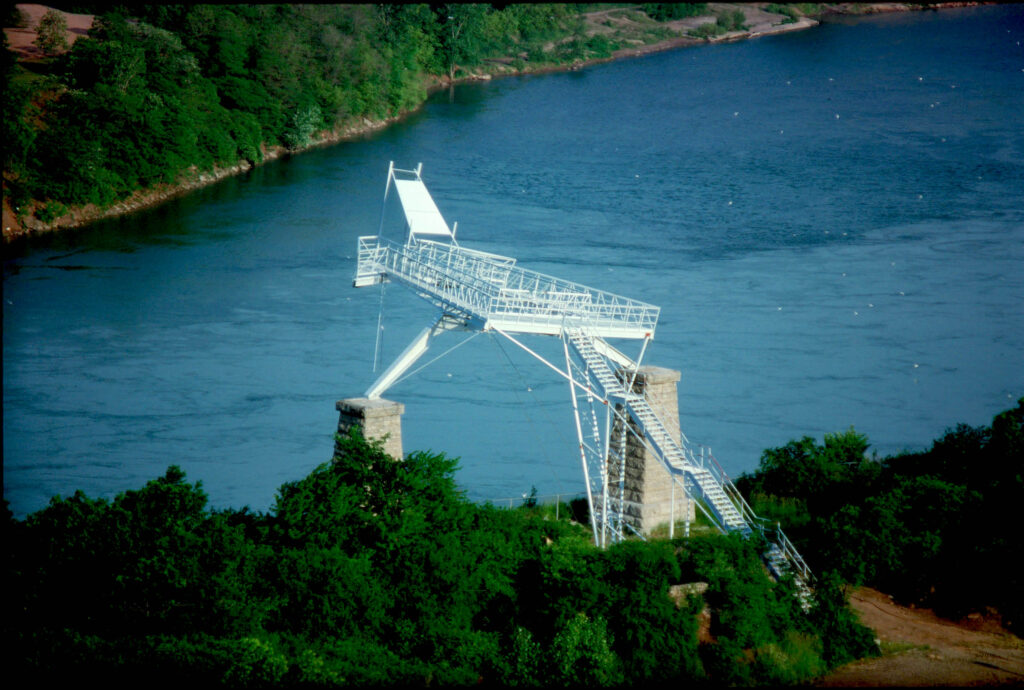
In contrast to the meditative, contemplative nature of Siah’s work, there was another sculpture within sight — Omega — a structure that cantilevered out over a ravine, a river roaring far below. A series of angled stairways and platforms that don’t align in any comforting human way. Nothing is square. Nothing is steady. Every step forces you to renegotiate balance. It’s a sculpture you don’t just look at — you enter a relationship with it.
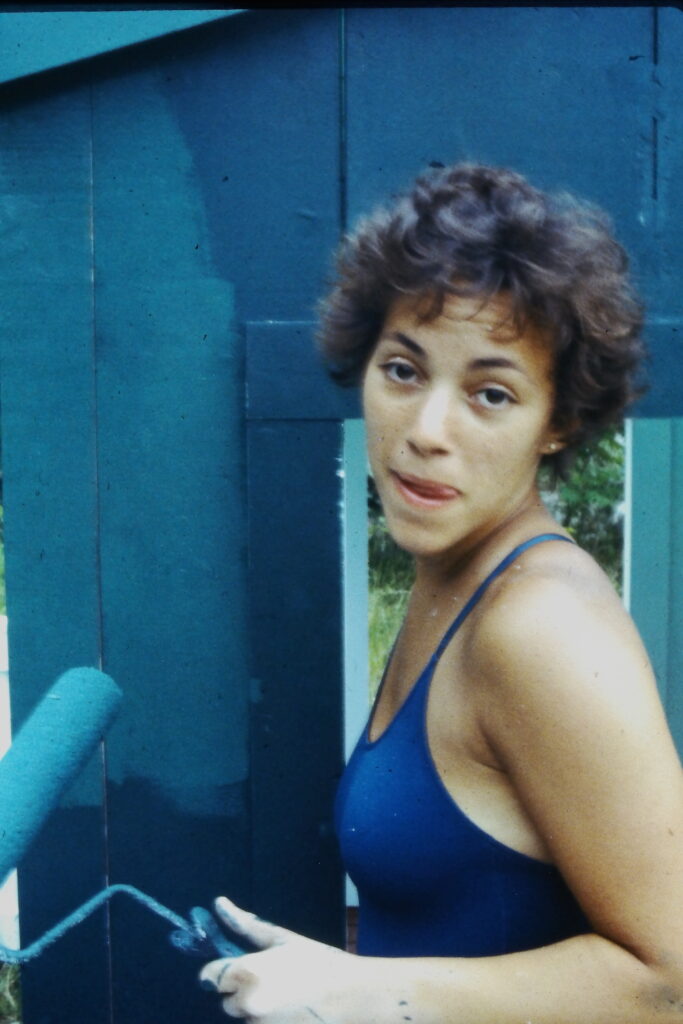
I had no intention of climbing it. Not until Shoshana suggested it.
We approached it late in the day, when the light was beginning to soften and the whole park felt suspended in that last hour before dusk. She looked up at the structure — all sharp diagonals and impossible geometry — and said, “Let’s go.”
I don’t know if it was the challenge or the memory of her etchings or the unresolved corner of my heart she still held, but I followed her.
The climb was terrifying.
The steps angled in ways that made your body second‑guess itself. The railing leaned when you leaned. Halfway up, you could feel the whole world drop away on one side — just the sound of water smashing against rock far, far below. My instincts from years of construction screamed, This is not safe. My instincts from the year of being around Shoshana whispered, Trust her.
She climbed with a kind of grace I hadn’t seen in her before — the grace of someone who had rebuilt herself and was still discovering what that rebuilt body could do. Every step felt like she was choosing to live her new life fully, without apology. I’ve always been drawn to women whose strength wasn’t loud but unmistakable.
When we reached the top platform, the wind was stronger than I expected. It pushed against us, not violently, but insistently — as if reminding us of the scale of the world we were standing in.
Shoshana stood at the edge, her hair blown back, the river a furious silver ribbon beneath her. She looked alive in a way that made something inside me ache.
“You left me too early,” she said softly. Not accusing. Just true.
I didn’t respond right away. I watched the river instead. The space between us filled with everything unsaid — the love we’d had, the timing that had failed us, the strange possibility that maybe we were being given a second moment.
Finally, I said, “I loved two women, Shoshana — but I never believed I had the right to assume either path was mine to claim. All I knew was that each choice led to a different world, and I was afraid of choosing wrong.”
She smiles — not with certainty, but with a kind of wistful acceptance. “Maybe there was never a right choice,” she says. “Only the one you were able to live with.”
We stood there for a long time, not touching, not talking, just breathing the same uncertain air.
Omega wasn’t just a sculpture. It was a metaphor so on‑the‑nose it would have been embarrassing if it hadn’t been so exact.
Two people standing on the top of an impossible structure, balanced between past and future, danger and desire, certainty and falling.
I didn’t know it then, but that climb would become one of the defining images of that era of my life — not because of romance, though there was tenderness there, but because it was the moment I understood something essential:
That life as an artist — life as myself — would always involve stepping onto structures that felt unstable, walking into relationships that felt uncertain, and climbing toward a view I couldn’t see until I reached it.
Art Park gave me that. Shoshana gave me that. And Omega made sure I never forgot it.