Your Choice: Listen or Read
It was about two years after that first Forecast slide night — long enough for me to feel rooted in Minneapolis, but still early enough that everything felt new and slightly precarious, as if my life here could tilt in a different direction at any moment. I had made friends, built a studio, and settled into the rhythm of the city’s art scene. So when Forecast reached out again, asking if I would create a piece for an upcoming exhibition, it felt like a quiet affirmation that I was becoming part of their ongoing story.
What they offered me wasn’t a room or even a wall in the traditional sense. It was the long slanted expanse beside the stairwell that led from the main floor up to the gallery — a space most people would have considered awkward, maybe even undesirable. But to me, it was perfect. A timeline needs movement, and nothing moves a viewer like a staircase.
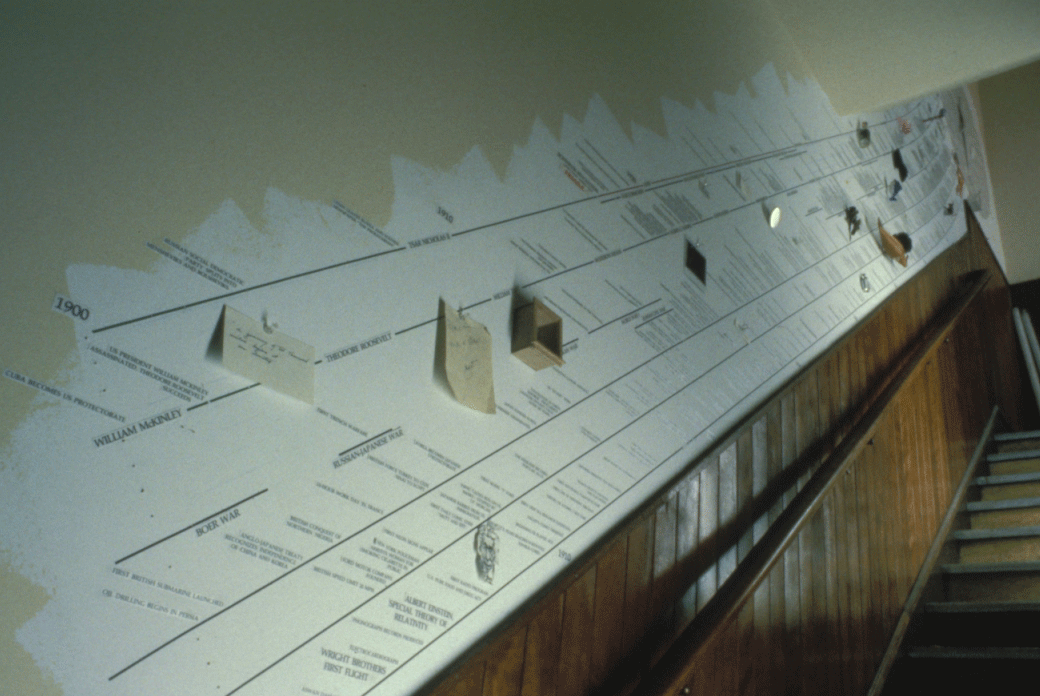
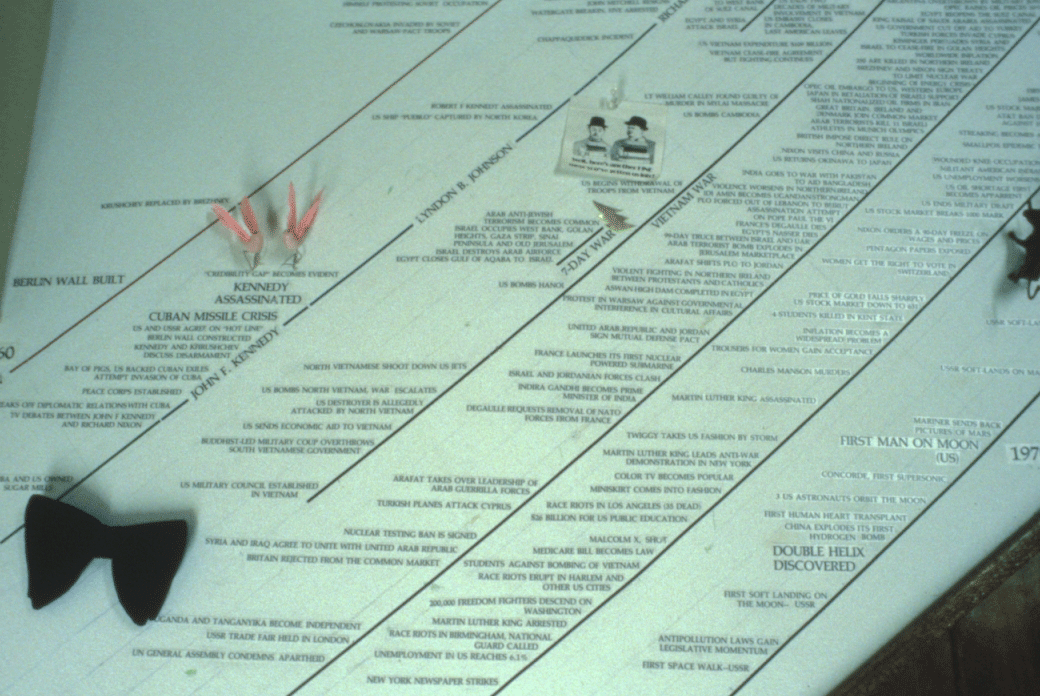
By then, I had been experimenting with the language of timelines — cutting and waxing down typeset columns, building sequences of information that could be followed like rivers. I’d learned just enough newspaper layout skills to be dangerous: the hot-wax machine, the trimming, the assembling of text blocks. Artpaper was in the middle of it’s seconf year.
I started to build the piece the way you build memory itself — fragments that add up when placed side by side. Strips of time arcing along the wall. Small objects pinned here and there: toys, odd trinkets, bits of color that refused to stay flat. And somewhere among it all, a large image of Wonder Woman sporting bright red boots. I didn’t plan it as a symbol, but looking back, it’s impossible not to see the influence of the WARM women who helped anchor my first year.
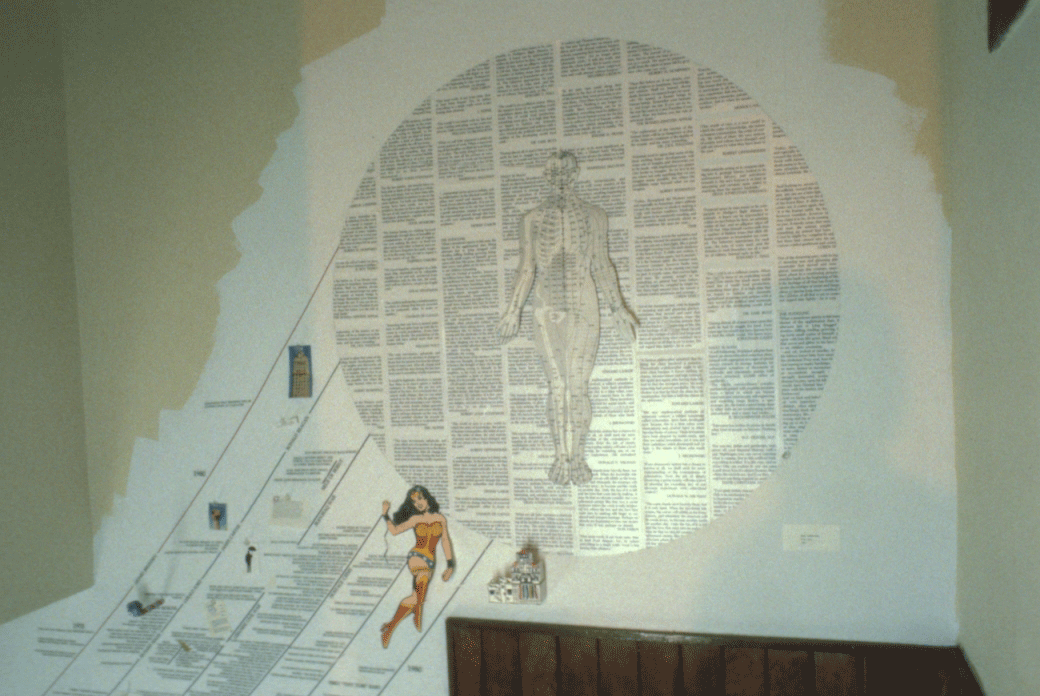
The final installation filled the wall with motion — text flowing like geological layers, objects emerging like artifacts from a dig, the whole thing alive with the sense that history isn’t still, it’s in progress. Visitors climbing the stairs would be pulled upward through the years, watching time unfold beneath their feet.
Reflections, Years Later
Looking back, that stairwell timeline was a kind of prelude — the first time I realized I could braid narrative, image, and object into a single flowing arc. I didn’t think of it as a “public artwork” then, just an experiment, a way of making sense of the moment Forecast had invited me into. But in hindsight, it was the seed of everything I would return to decades later when I began proposing timelines for the Arts District.
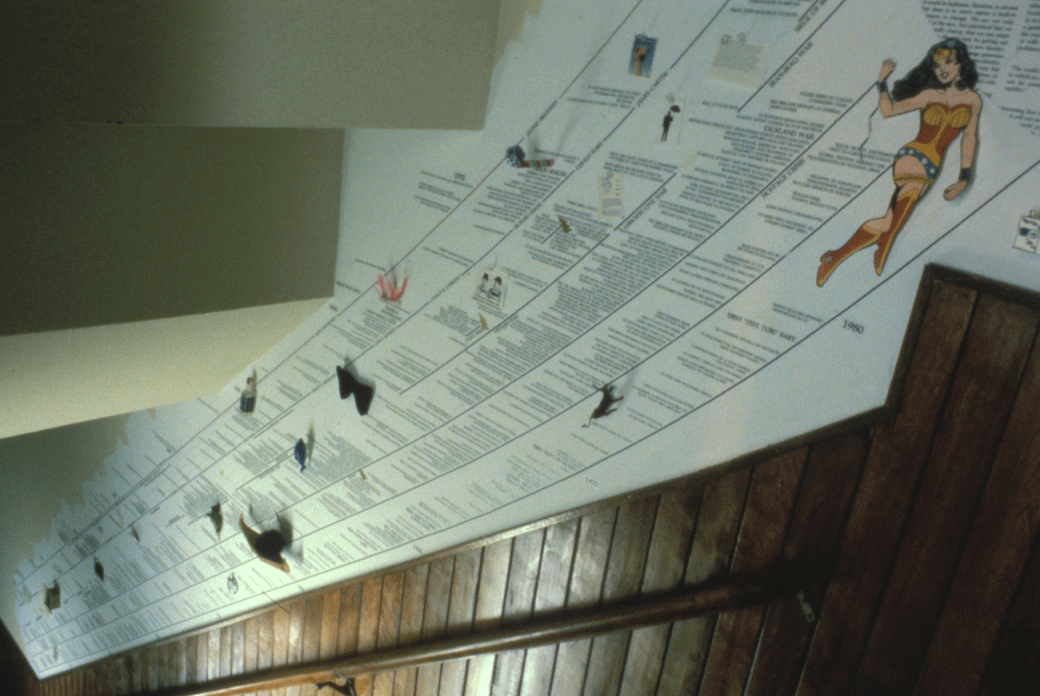
And those toys — the tiny plastic animals, the bright scraps of color, the odd little objects that made no sense until they did — they followed me through every artistic era that came after. They moved from studio to studio, from sculpture to installation, from whimsy to meaning. Maybe they were the last anchors of the child in me: the part that never stopped tinkering, never stopped arranging the world into stories, never stopped believing that play was a form of truth, of making art.
For a brief moment, on that slanted wall beside a staircase, all of that came together — imperfect but alive, temporary but formative. A timeline that held its shape just long enough to show me the path I hadn’t yet realized I was already walking.