Your Choice: Listen or Read
I installed the neon first, and I did it myself.
There was no neon crew, no art handlers, no gloves—just one museum staffer and two halves of a sign made of glass, gas, and optimism, with no safety net. It was heavy, fragile, and very clear about how badly it wanted to break. I lifted it, wired it, mounted it—slowly, carefully, holding my breath. If it broke, that was it. There was no backup plan, just the option to explain why the words were missing.
So I didn’t let it break.
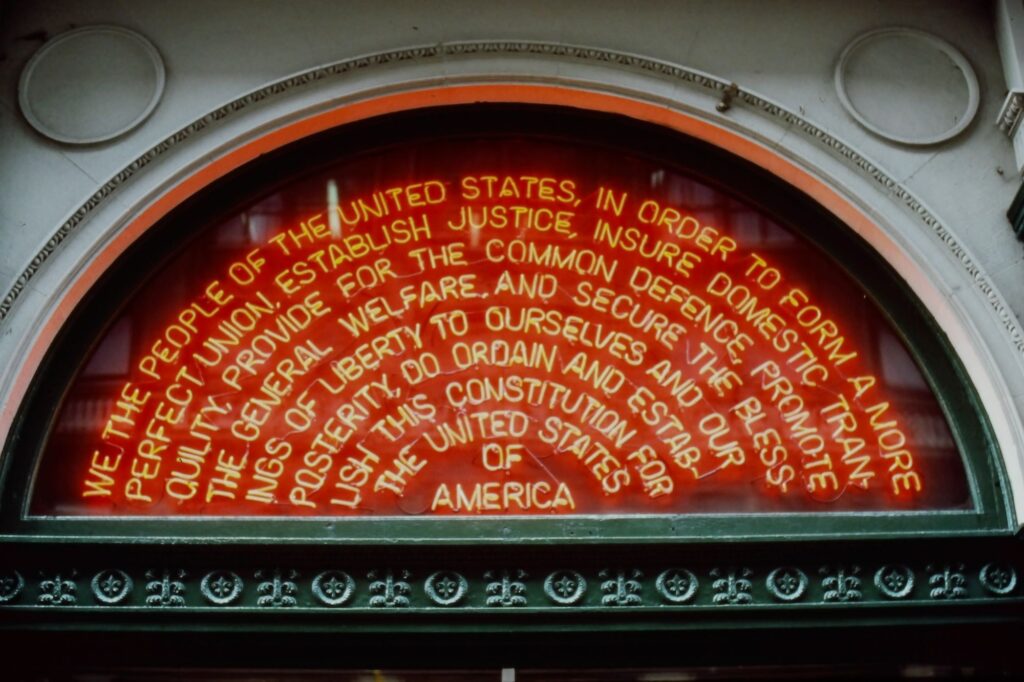
I wasn’t supervising. I was inside it—hands on, body involved, consequences immediate. This was how most of the work happened then: alone in the window, visible from the street, with no distance between the idea and the labor. People walked by, slowed down, watched. I became part of the installation before I meant to.
These days I stand back and let younger men do the work. That’s earned. But back then, if something needed to happen, I did it—or figured it out on the spot. I can still feel that version of the work in my back and hands: the authority that comes from carrying the thing yourself, without a net.
Next came the cave itself. I stacked four-inch slabs of Styrofoam, one layer at a time, until the sides and back wall stood where they were supposed to—solid, tall, undeniable. This part was never a gamble. I knew exactly what it would look like at this stage because I had already watched it fail at full scale in the prototype, and learned exactly what that stage was for. The walls were all edges and steps, every four inches shouting its own existence. It didn’t look like a cave yet; it looked like a set of instructions for one.
There was only one way to fix it: erase the evidence.
I took a simple paint scraper and began shaving the walls down, attacking the jagged layers inch by inch, trying to convince foam to forget that it had ever been rectangular. I was already behind schedule, which meant I scraped faster than was reasonable and longer than was smart. Hours passed. Then an entire day. Then most of another. Static electricity turned the window into a storm. Styrofoam beads clung to my clothes, my hair, my face. I was coated head to toe, a kind of abominable snowman made of habitat. It couldn’t have been healthy, but it was effective.
By the time I finally stopped, the cave had softened. The walls curved. Light fell differently. The space began, at last, to feel inhabited rather than constructed. I went home exhausted, satisfied, and slightly alarmed to discover that my right hand would not open. It remained clenched, perfectly shaped to hold the scraper, as if my body had decided this was simply who I was now.
I slept that way.
The next morning, mercifully, my hand unlocked and returned to use. The cave, however, did not release me so easily. The most striking thing was the window itself—blindingly white, stripped bare. The cave was finally there—physically real, imperfect, and demanding the rest of the work that would make it speak.