Your Choice: Listen or Read
I don’t actually remember filling out the application. That’s the strange part. You would think a moment like that would be etched in sharp relief — the envelope, the form, the hopefulness — but no. The doorway into MAEP is covered in a kind of fog. What remains clear is that one day, I simply found myself inside it.
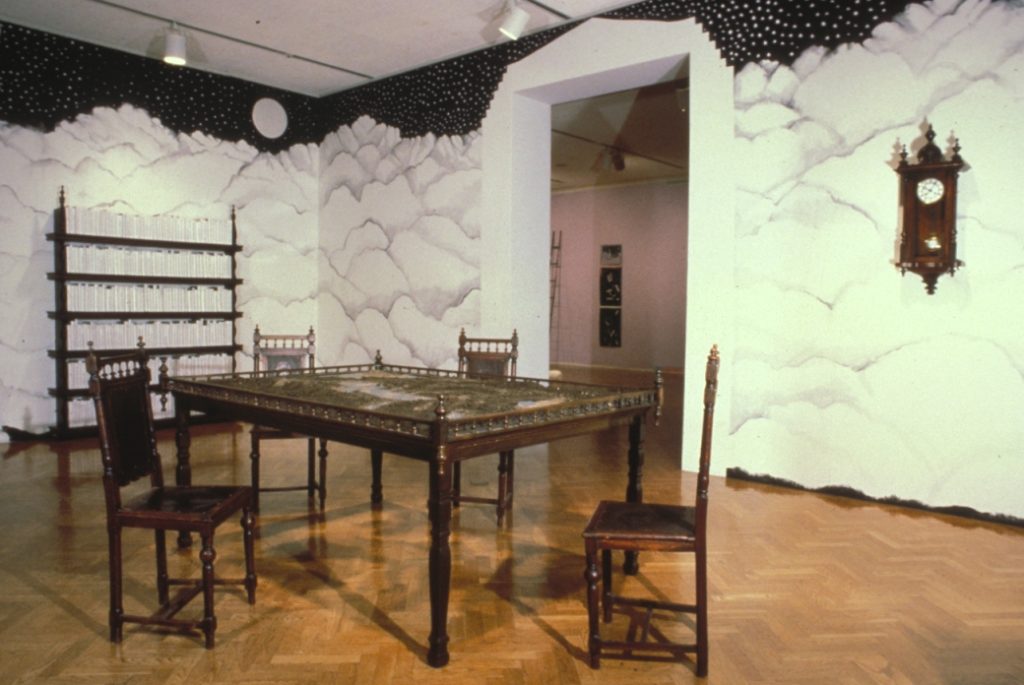
The Minnesota Artists Exhibition Program — MAEP — was one of those rare organisms in the art world: run by artists, for artists. Working artists sat on the panel and decided who would show in the galleries at the Art Institute of Minneapolis. People in the community sometimes joked that it was like handing the animals the keys to the zoo — affectionate shorthand for the way MAEP trusted artists to steer the ship themselves. That alone made the program feel alive, unpredictable — a little risky. It didn’t have the embalmed certainty of a traditional museum program. It had pulse.
And one day, that panel selected a show we would eventually title Journeys — four artists sharing the MAEP spaces. You entered first through a smaller room, then passed into the larger gallery beyond. Our work was held loosely together by the idea of passage. Movement. Time.
I was one of them.
I wasn’t yet the artist people would later associate with ants and living systems and philosophical contraptions. I was still building toward that — still circling the questions of what art is for. But MAEP said, in effect, “Come in. Try something. Let’s see where you go.” I didn’t fully grasp how important that invitation was. Looking back, it feels like one of those moments when life opens the gate just a little wider and says, “If you’d like to step forward now, this would be the time.”
There were three other artists besides me. Two remained in the large gallery, while Georgiana and I shared the smaller room at the entry. Each of us shaped our own world inside the broader architecture of Journeys.
This was also when I began working with Georgiana Kettler, who felt — and still feels — a little otherworldly in memory. Curious. Independent. Slightly mysterious. She was a member of WARM — the Women’s Art Registry of Minnesota — and I already had many positive connections there. When I described the Time Room installation, she simply asked if she could paint the walls, and I said yes without hesitation. She covered the upper band of our room with watercolor washes of black, circling the space with rolling white clouds and a night sky full of stars and moonlight. It transformed the gallery into something between a Victorian parlor and a dreaming mind. Standing there, I felt less like I was making an artwork and more like I was building a place where thought might come to rest for a while.
The room wasn’t finished yet — not even close — but the permission had already been granted. A door had opened, and I had stepped through it, not yet knowing what would unfold — only that I should keep paying attention.