Your Choice: Listen or Read
I remember the day the first body came out of the mold.
It was lying on the studio floor in that strange, luminous way clear plastic has when it catches the light. It looked less like a sculpture than like a presence that had briefly stepped out of a dream. I turned it gently so the light moved through it. The form was unmistakably human, but emptied of flesh, ready to hold something else.
Plants, I decided.
Six Figures began with that simple intuition: bodies not as statues, but as vessels. Something living would grow inside them. Life would circulate through them. They would breathe.
The figures were cast from my wife’s body. The mold had captured every subtle contour — the curve of the shoulder, the gentle taper of the waist, the long line of the leg. When the first cast dried and I lifted it free, it felt almost miraculous. A perfect echo of the body, but translucent, open, waiting.
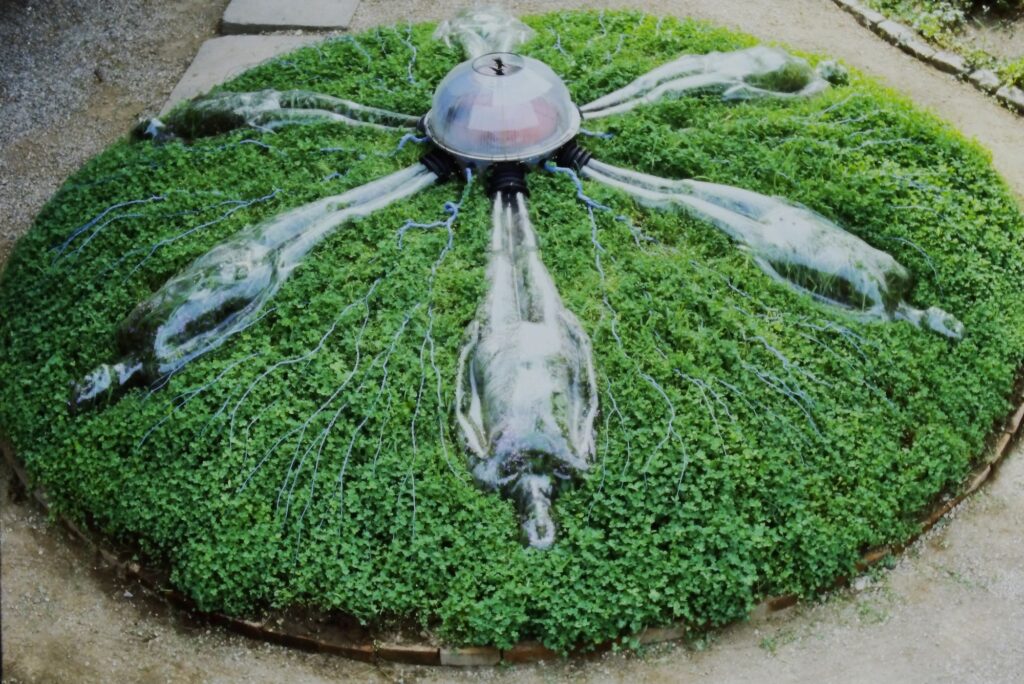
Soon there were two. Then three.
Eventually six.
They would lie around a central sphere like petals around a strange mechanical flower. Inside the dome I installed a fan, bright red blades clearly visible through the transparent shell. I never hid the technology in my work. I liked the honesty of it. The system would draw air through the bodies so the plants inside wouldn’t overheat in the sun. A soak hose would provide water when sensors detected dryness. A toy radar assembly — absurd and beautiful — sat atop the dome, gathering what I liked to imagine as cosmic energy from the sky.
From the dome, wires stretched outward across a mound of clover like veins.
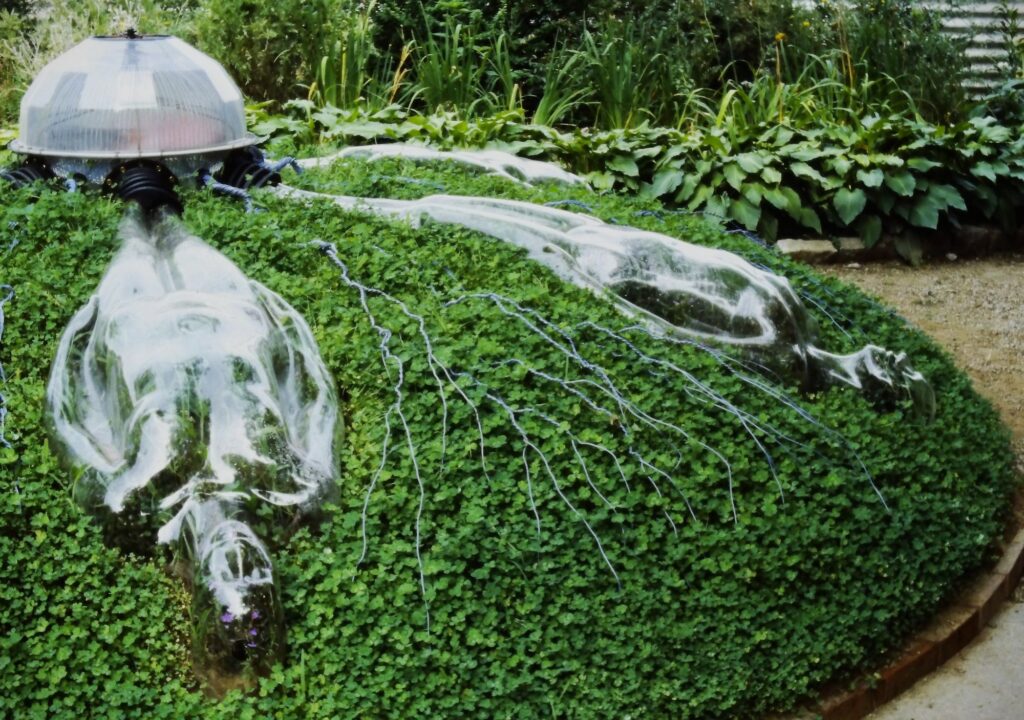
When the bodies were finally assembled in the garden bed, something happened that I hadn’t quite anticipated. The piece stopped feeling like sculpture and began to feel like an organism. The six forms radiated outward from the center, their interiors filling slowly with soil and small plants. Lobelia was planted among the greenery, tiny purple flowers that would eventually bloom inside the transparent torsos.
I would kneel beside the figures for long stretches of time, adjusting a wire here, tucking soil around a root there, watching the way sunlight moved through the plastic. The whole system breathed quietly: air circulating, water seeping through the soil, plants adjusting themselves toward the light.
It was the most beautiful piece I had ever made.
And yet while I was building it, something else was unfolding just beyond the edges of the work.
At first it appeared only as small disturbances. A silence that lingered too long. Conversations that ended too quickly. The kind of subtle shifts you notice without quite understanding what they mean.
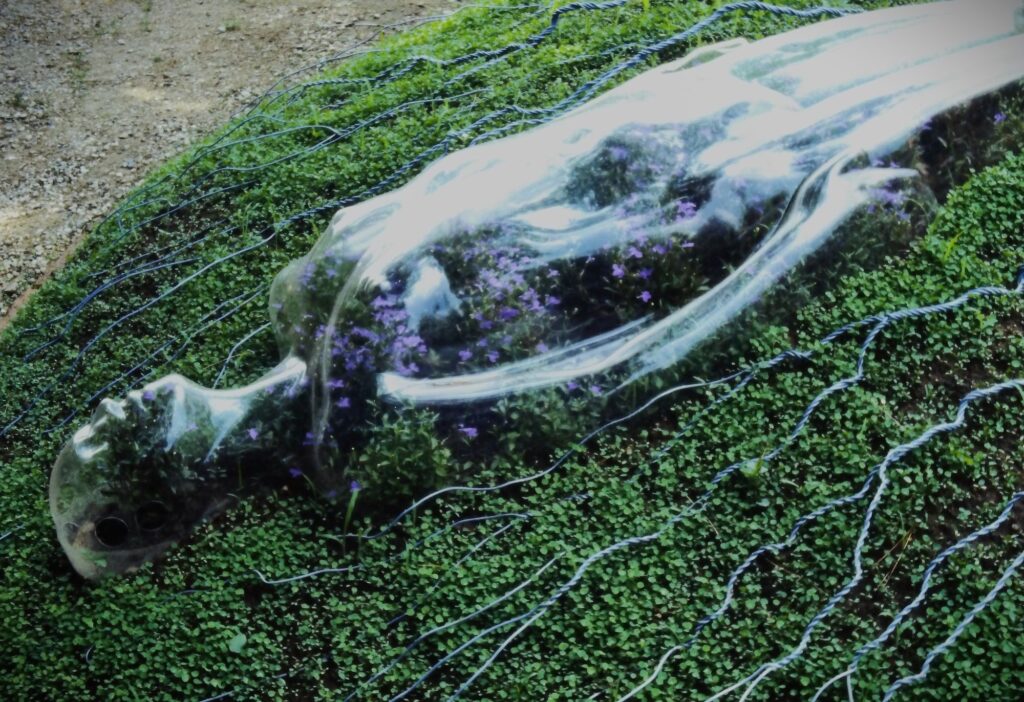
The garden was calm. The piece was thriving. The plants were taking root inside the bodies just as I had imagined.
But inside my own life, something had already begun to fracture.
I remember standing one evening near the central dome, looking across the six figures arranged in their quiet radial order. The fan inside the sphere hummed softly. The wires stretched outward like a nervous system across the clover. The plants inside the bodies had begun to lift their leaves toward the light.
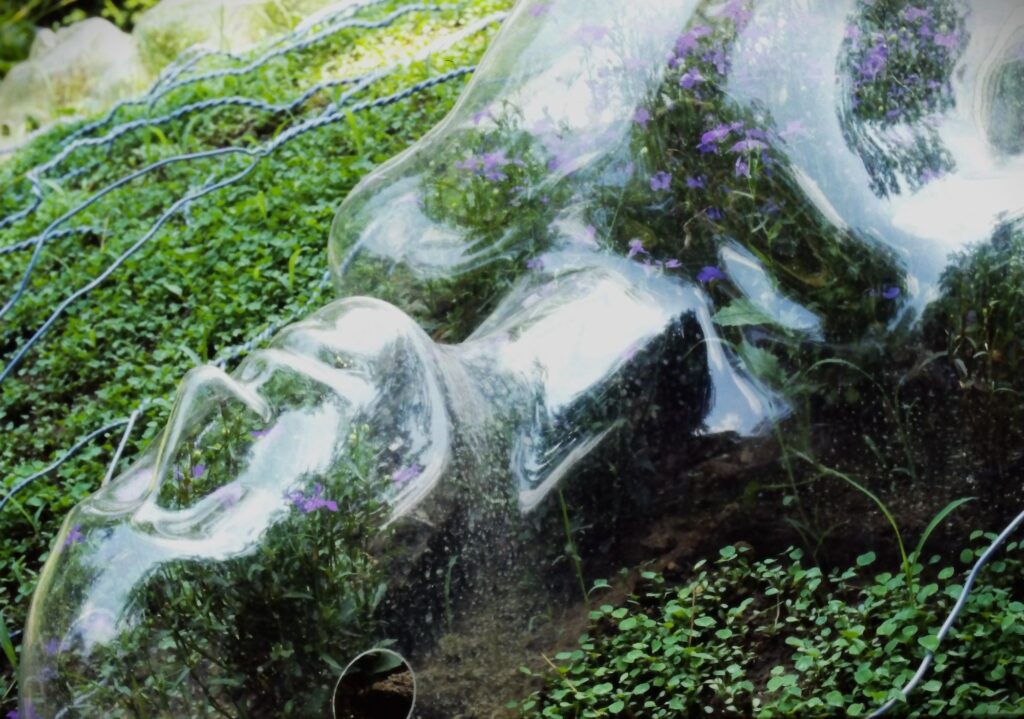
Everything about the piece spoke of balance — air, water, energy, life circulating through a delicate system.
And I understood, in a way that had not yet become words, that the balance in my own life was about to break.
At the time I didn’t know how radically things would change.
I only knew that the work, for a brief moment, had achieved something rare: a fragile harmony between machine, plant, and human form. A small ecosystem held together by attention and care.
I stood there longer than necessary, listening to the fan turn inside the dome.
Soon enough the rest of the story would begin.