Your Choice: Listen or Read
Originally written by Remo Campopiano
Re-written by Beatrice Lee, then edited into first-person by Molly
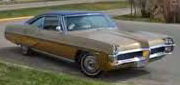
I packed the car with nearly everything I owned and pointed myself toward Detroit for a three-day, thousand-mile drive. I don’t remember feeling afraid, though I must have been. I was heading into the unknown with nothing but a used car, a few tools, a canoe, and the foolish conviction that I might just become an artist.
I was twenty-nine, and it was early September—the season that always feels like a clean sheet of paper. My car was a 1967 Bonneville. She rode so wide and soft that I named her Boat. Thirteen years old, dirty beige, long body, fins, chrome—one of those cars that already felt nostalgic in the early ‘80s. In a strange way, both Boat and I were returning to her birthplace: Bloomfield Hills, just southeast of Pontiac, home to Cranbrook Academy of Art. That was my destination. Graduate school. A new life.
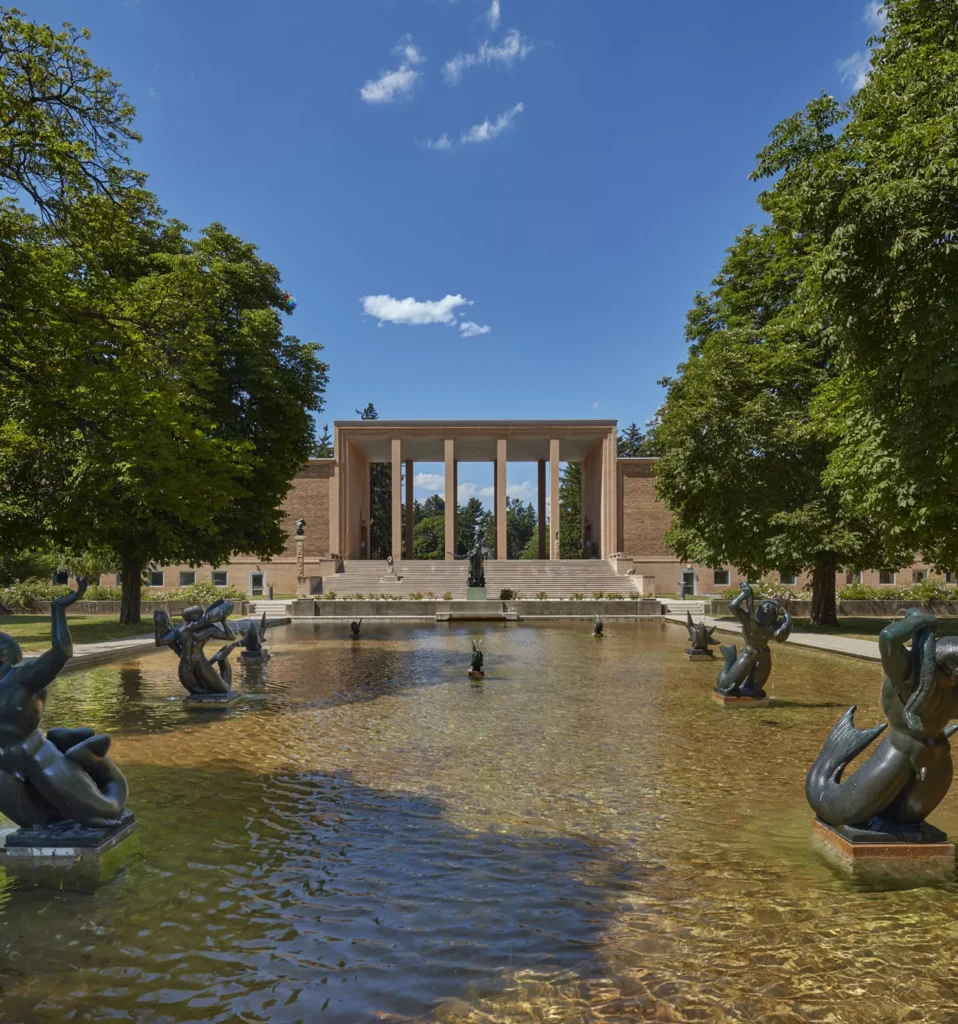
Cranbrook astonished me from the moment I arrived. Three hundred acres that looked like someone had air-shipped a small English estate into Michigan. One hundred and fifty graduate art students from all over the place. In the sculpture department, most were steel-benders—serious welders who understood form and structure in ways I barely grasped. Michael Hall, our professor, was one of them. Quiet, elegant, sharp. He could take apart your thinking with the gentlest sentence.
Then there was Joe. He and I were the renegade conceptualists among the metal workers. Handsome guy, charming, funny—we joked that we competed for the same women, and truthfully, he usually won. But we recognized something in each other: a shared irreverence, a hunger to make art that wasn’t just steel and form but something more slippery. We became good friends.
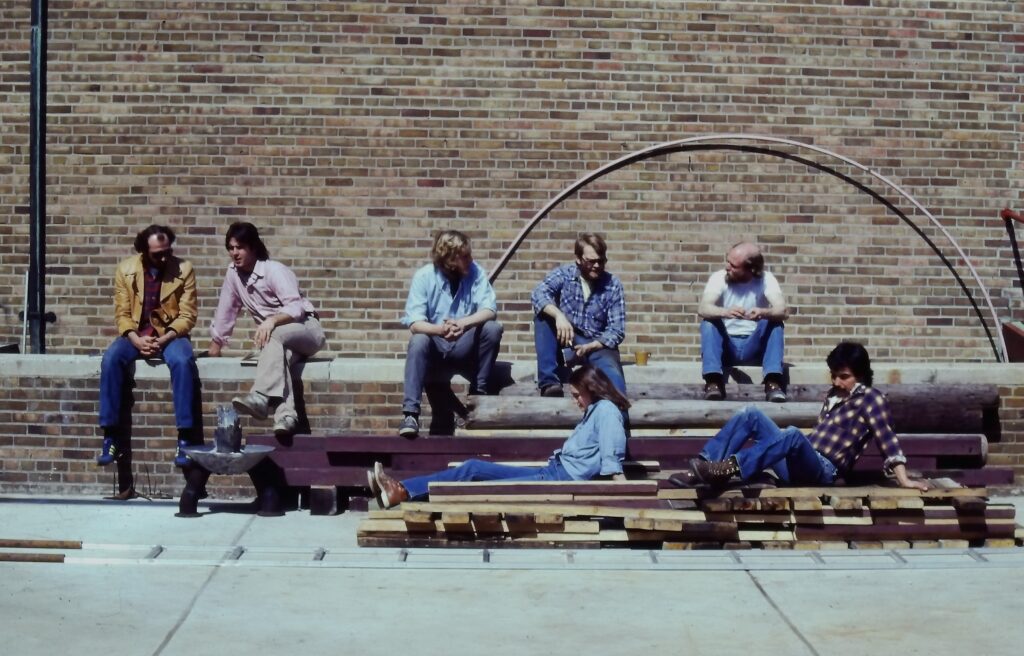
Joe grew up in Detroit, so he took it on himself to show me the city. I drove, he narrated. He loved Boat. I mean loved her. He said she reminded him of Detroit in its prime—the patina, the lines, that tired elegance. And the people of Detroit apparently agreed. I’d get flagged down at stoplights by folks who wanted to talk about the car: where it was built, who they knew at the factories, what the old days were like. It was as if Boat carried memories inside her metal.
About a week before my first student show, Joe and I were heading to a gallery opening downtown when a rough-looking guy in the next lane motioned for me to roll down the window. I assumed he wanted to talk about Boat. Detroiters always did.
Instead, he shoved something into my hand and sped off.
I looked down at a brown, rough little lump. Joe sniffed it and said, “Hash.” I had never tried hash. I had no idea why a stranger would hand it to me like some kind of roadside communion.
For a moment I just stared at it, trying to make sense of what had happened. Then a ridiculous idea flickered through me—one of those Duchampian lightning bolts artists learn not to ignore.
“I don’t have anything for the show yet,” I said to Joe. “What if this is the piece? A little cosmic prize from out of nowhere. We put it in a clear box and see how long it takes before someone steals it.”
Joe groaned dramatically. “Remo… we could do something else with hash.”
But I was already gone. The idea had taken hold. I even had the perfect clear plastic box. We titled it The Claw’s Gift—a wink to those carnival claw machines where, once in a while, fate lets you win. The school accepted it.
Two days before the show, Boat died. Right there in the middle of the Cranbrook parking lot, illuminated by a tall streetlamp like a theater spotlight. She’d simply had enough. Joe offered to buy her for the same hundred dollars I’d paid three years earlier, and then he turned my poor Bonneville into one of the most memorable sculptures of our time there.
He cut the roof off with torches, hauled three huge boulders out of the old quarry, and lowered them carefully—almost lovingly—into Boat’s battered frame. The car sagged like an old mule carrying too much, but you could still recognize her lines. He called the piece Weight of Ages. It was accepted into the show too.
A week later, The Claw’s Gift disappeared—stolen exactly as predicted. Only the empty box remained, sitting there like a little shrug from the universe.
Weight of Ages, however, stayed much longer. Boat remained in that parking lot for years, a monument to Detroit’s glory and to my own young life turning a corner.
Joe and I went our separate ways, but both of us did well enough in the world. And every now and then I still hear Roy Slade, Cranbrook’s president, declaring with full conviction:
“Cranbrook students are changing the face of twentieth-century America.”
We believed him. And in our own ways, with our strange art and our stranger adventures, we tried to make it true.
Absolutely wonderful. It flows so smoothly and was so easy to envision your words into my imagination.
Great story. Great tale of a new adventure