Your Choice: Listen or Read
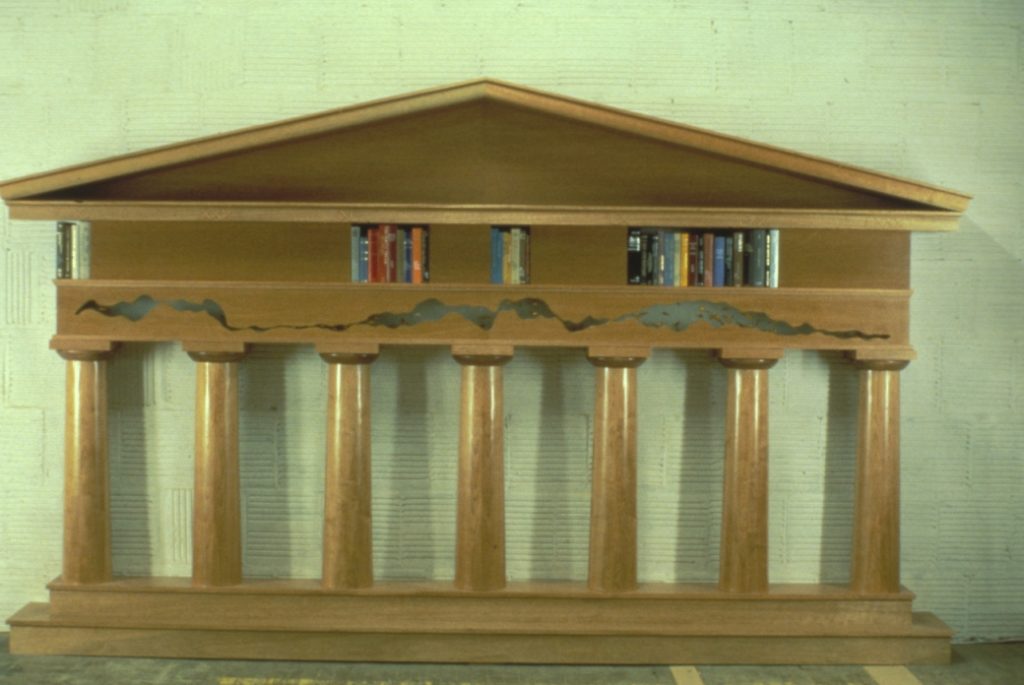
I didn’t know what I was doing in 1981. I was working every day, showing up in that Minneapolis studio, trying to shape something meaningful, but inside I felt like I was groping in the dark. The Pediment Piece was supposed to be my next big idea. I had convinced myself the country’s rising national debt was an urgent metaphor, so I graphed it across the entire southern wall of my studio, line by climbing line from 1900 to the present.
It wasn’t subtle. It wasn’t even particularly insightful. But I was desperate for an idea, and desperation can be a loud companion.
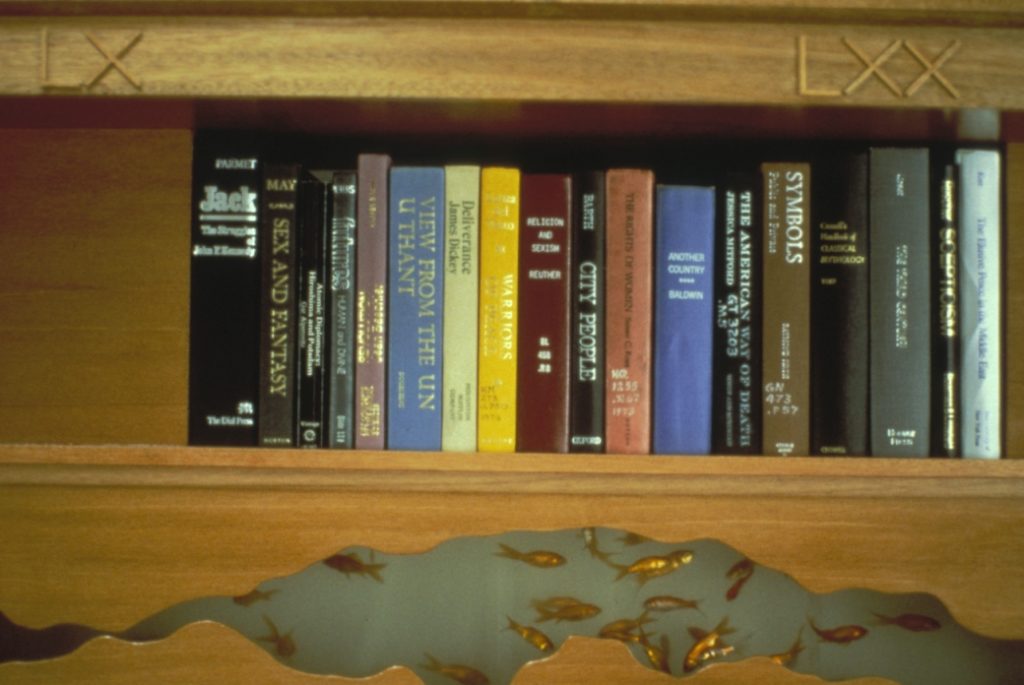
I built the piece anyway. I shaped it, sanded it, and tried to convince myself that all this labor meant something. It was beautiful in a way—tight joinery, precise curves, strong composition—but it had no hidden life. No mystery. If good art invites you in, this one shouted its meaning before you even took a breath.
Still, working on a weak idea is sometimes the only way to keep the body warm until the real idea arrives. And that studio was already humming with another project—the ribs of a six-foot wooden globe I was building with Aldo. The two of us were surrounded by sawdust and potential, and without realizing it, that other project was pulling me somewhere new.
Somewhere better.
Around that time, I started thinking about the ant installation I’d done earlier. It had worked in a way the Pediment Piece never would. The ants were alive. They were unpredictable. They made each piece move and breathe. People could not look away. And I remember thinking: Why did that work? What was I tapping into? Could I push this further?
That’s when I got the idea for the goldfish.
I imagined a long horizontal tank—twelve feet, maybe more—stretching across the top of one “establiture” like a living frieze. I didn’t know why yet. I just felt an itch, the kind that comes before a real idea shows its face. So I built the tank. I installed it. I filled it.
And that’s when everything changed.
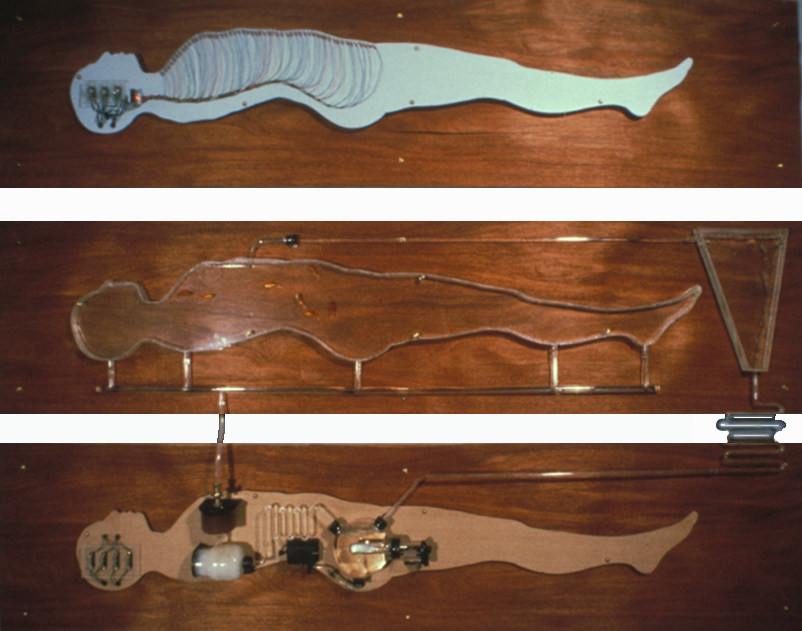
Keeping a creature alive inside a sculpture is not symbolic work. It’s not even conceptual work. It’s responsibility. It’s pumps and filters and aeration chambers. It’s oxygen levels and water clarity and flow rates. It’s night checks and morning checks and a hundred tiny decisions that determine whether something small and vulnerable keeps breathing.
Somewhere in the middle of all that tubing and wiring, I realized the truth:
the real sculpture wasn’t the tank—it was the entire system keeping the tank alive.
I stopped looking at the southern wall, did an about face toward the northern wall.
Life Support Systems wasn’t a metaphor.
It was literal.
It was functional.
It was a commitment.
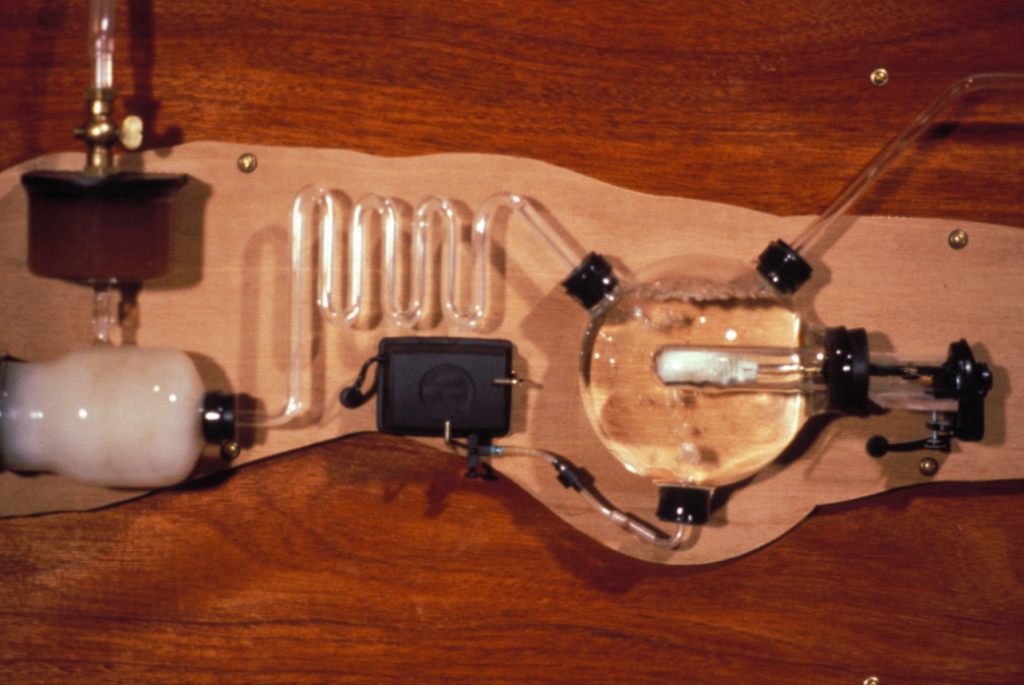
This was the moment my work opened—not outward toward politics, but inward toward care. The Pediment Piece had come from anxiety; Life Support Systems came from attention.
I had stumbled onto something I didn’t have language for yet:
when you design the conditions for life, you’re not just building a sculpture—you’re building a world.
And that realization stayed with me long after the goldfish were gone. It shaped everything that followed, even when I couldn’t see the line forward.
Sometimes the wrong piece is the doorway.
Sometimes the thing you struggle through becomes the ground from which the real work grows.
Life Support Systems was that pivot for me.
The moment a weak idea led me, reluctantly and imperfectly, to a better version of myself.