Your Choice: Listen or Read
Cranbrook never felt like a school. It felt like a world just slightly tilted from reality—Saarinen’s arches and stone pathways catching the moonlight in a way that made you wonder whether you were walking through a campus or drifting into some old European dream. Even the silence had a personality there. It wrapped around you, tapped your shoulder, and whispered, Pay attention… something is about to happen.
Maybe that’s why the bar became the heart of everything. We built it early in the year—mostly Ron Leax, muttering as he measured, though I helped enough to claim a corner of ownership. It sat in the basement of one of the administration buildings, and every night it collected the day’s residue: lacquer fumes, wet clay, metal dust, and all the stray laughter drifting in from different departments. On Tuesdays, Thursdays, and Saturdays the place came alive. Students gathered around the bar or spread out at tables, and the clack of the pool table in the back kept time like a heartbeat.
One night I sauntered up to the bar and she appeared next to me: Lynn.
She had long dark hair and those sparkling eyes that seemed to see more than you were saying. Nothing dramatic happened—no spotlight, no movie moment—just the simple surprise of someone interesting settling in beside me. I didn’t think “romance” or “destiny,” but something in me straightened up a little, paying attention. I just liked talking to her. It felt easy, the kind of conversation where your beer goes warm because you forget you’re holding it.
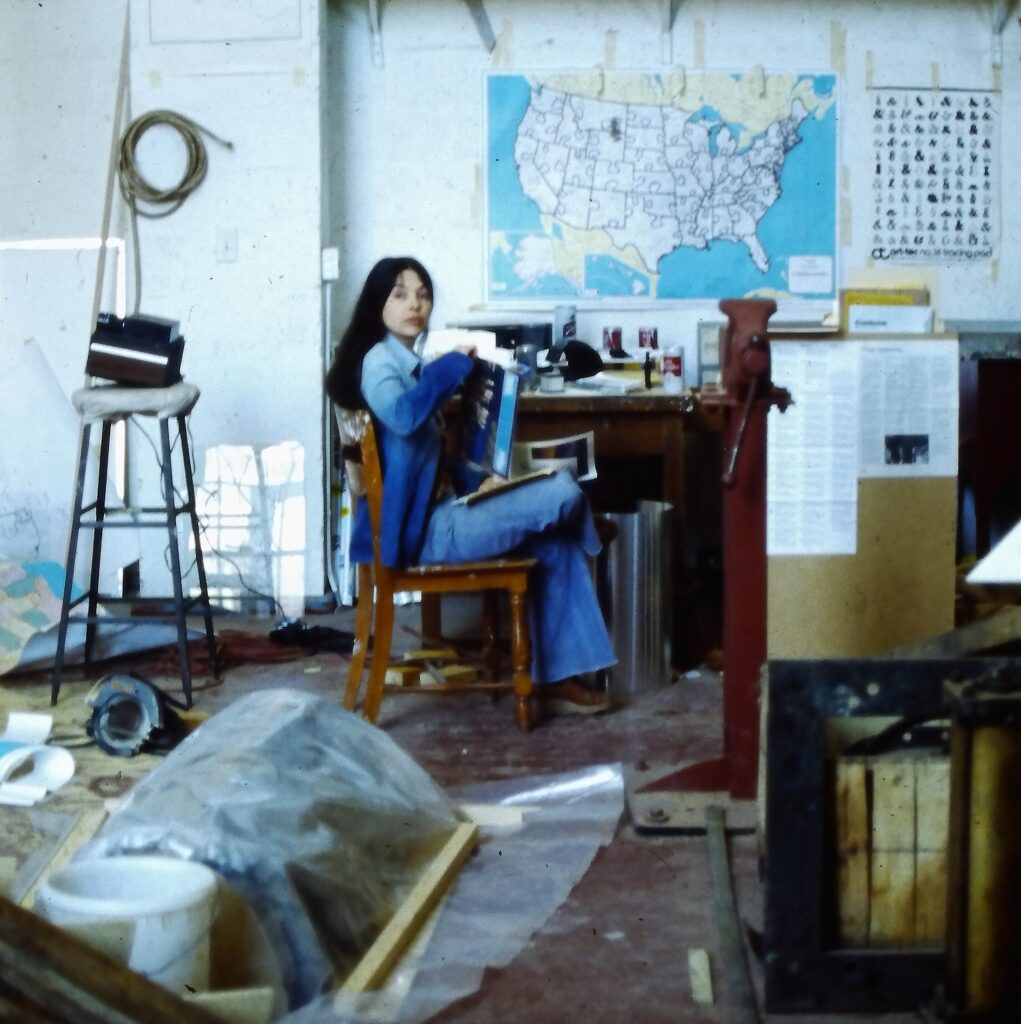
Lynn was part of the feminist movement in a way that wasn’t performative—she lived it. I was clumsy then, clueless about things I’d never been taught to see. Once, after I made a tone-deaf comment, she didn’t scold me. She just asked a few pointed questions, gently, so I walked myself right into the correction. It didn’t sting—it landed. And I remember thinking: This is someone who knows how to think.
It was a sharp contrast to what had happened the week before, when Linda, one of the fiber artists, grabbed me by the hair, hauled me to the ground, and made me take back something equally stupid. Lynn’s way stayed with me longer.
We kept talking at the bar, and eventually that spilled into the studio. She was working on these huge clay plates—big, ambitious forms that were hard to move once they set up. The challenge was all mechanics: how do you shift something that wide and fragile without twisting it or stressing it? That was where I could actually be useful, not as a fixer but as another sculptor who understood weight, balance, and leverage.
We’d stand there staring at a plate on a board, talking through possibilities, testing little adjustments, laughing when an idea clearly wasn’t going to work. Bit by bit, we figured out a better system. It wasn’t dramatic—just two artists solving a problem together. But there was something about that teamwork, that quiet collaboration, that let me learn who she was without either of us having to say much at all. Little did I know that just three years later, someone would describe the way we worked together as “a well‑oiled trapeze act.”
Outside the studios, Cranbrook shaped the rest of our courtship. The place had moods. On foggy mornings the stone walkways felt medieval. At night the ponds reflected the world like portals. And then there were the costume parties—spontaneous eruptions of collective madness. One year a group of students came as a bunch of bananas, five of them shuffling across the dance floor in yellow foam. I still have the photographs: bent stems, wide grins, the absurd joy of being young artists in a world that didn’t quite exist anywhere else.
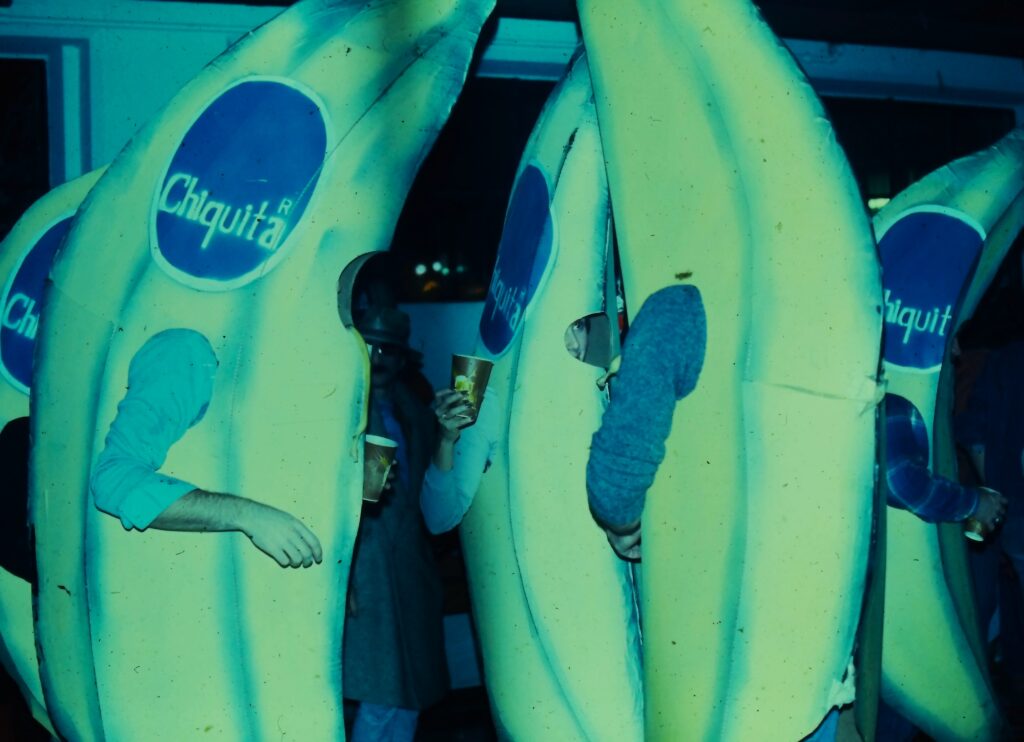
Those parties weren’t escapism. They were a way of saying, If life is going to be strange, let’s make it beautifully strange together.
Lynn flourished in that environment, and I flourished in hers. The more time we spent together—the questions, the patience, the way she committed to everything wholeheartedly—the more I felt myself leaning toward her. Not falling dramatically, but tipping gradually, like something in me was adjusting its angle toward the sun.
It was an enchanted time, suspended between the pressure of making work and the freedom of not yet belonging to the real world. We shared meals, long walks, and little moments that accumulated almost without our noticing. Somewhere between the kilns firing, the parties blooming with color, and winter settling across the campus, we wove ourselves into each other’s routine.
As graduation approached, the air shifted. Deadlines, thesis exhibits, futures pressing forward. But the magic of that year—her beautiful mind, her calm clarity, the strange beauty of that campus—held us close.
And I didn’t want to see it end… some quiet, stubborn part of me refused to let it go.