Your Choice: Listen or Read
Cranbrook in 1978 didn’t feel like a school. It felt like a world that shouldn’t have existed — part old-world manor, part Saarinen dreamscape, part pressure cooker for people who didn’t yet know who they were but desperately needed to find out. The place vibrated with ambition and anxiety, with strange collisions of high culture and raw, unfiltered desire.
The truth is, everything mattered that year: every glance, every critique, every failure, every experiment.
And Cranbrook gave me failures in abundance.
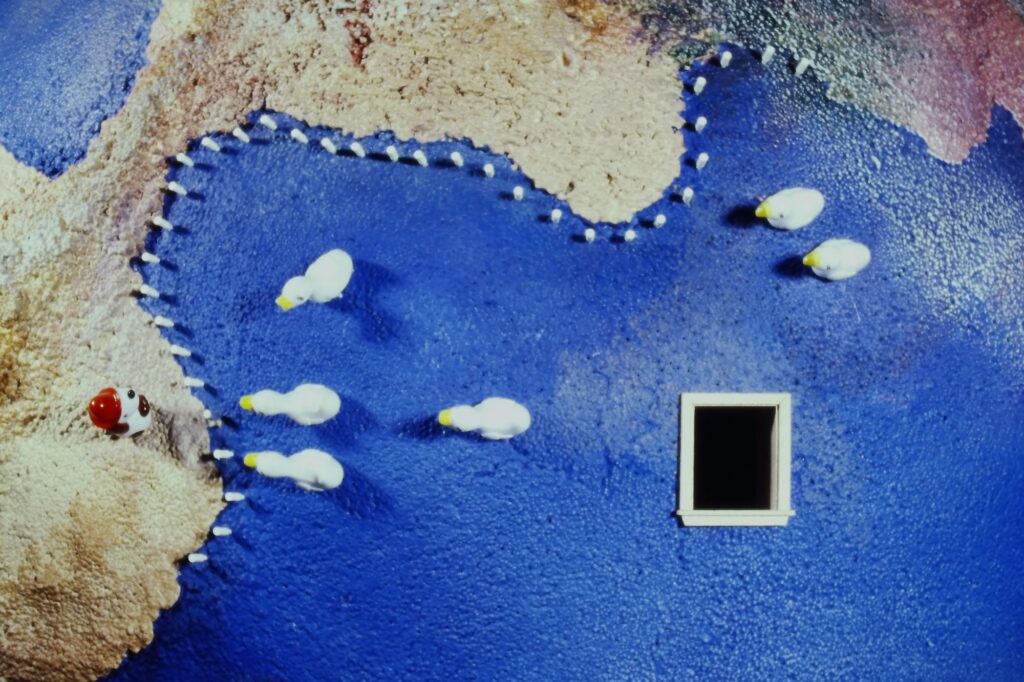
One day the art critic Germano Celant — sharp-eyed, elegant, intimidating in the way only Europeans in black jackets can be — walked into my studio. The whole sculpture class was gathered. He took one slow look around, paused, and said:
“Here is a conceptual artist, without an idea.”
It felt like being stripped naked in front of the room. Not humiliated — exposed. I knew instantly he was right.
I left the studio and spent the rest of the day on the Mark di Suvero swing, crying like a child who suddenly realizes he has to grow up. Everything I had been making felt hollow. Clever, maybe. But hollow.
And somehow, in that collapse, a door opened.
I thought about ants.
I thought about glass.
I thought about systems and longing and the strange machinery of human aspiration.
Those thoughts would eventually ignite into the Large Glass piece — but at the time, all I knew was that I had to dig deeper than I’d ever dug.
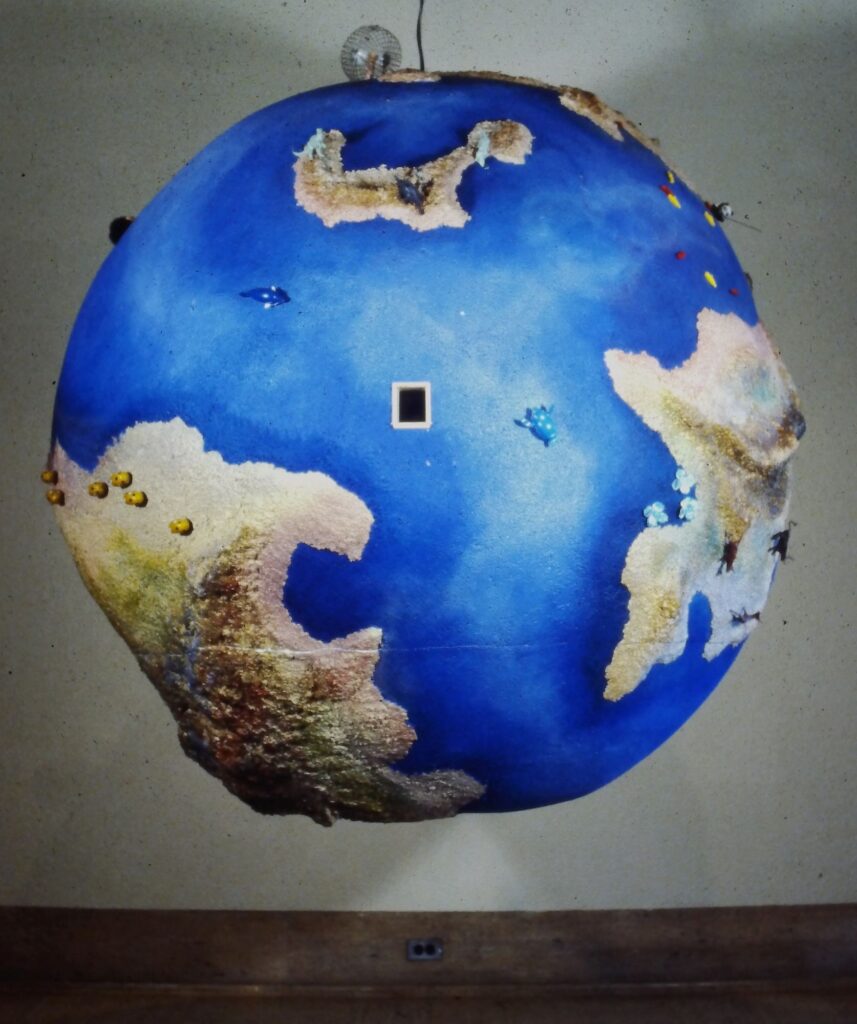
Meanwhile, my daily life was an unsteady blend of manic creativity and emotional drift. I threw myself into the Toy Globe, a year-long obsession that would eventually teach me more about failure than success. I didn’t know it then, but that struggle would become the first real test of my artistic courage — the first time I understood that bad ideas can be necessary stepping stones to the good ones.
And while all this was happening, I confronted fear the way only a young artist does: recklessly.
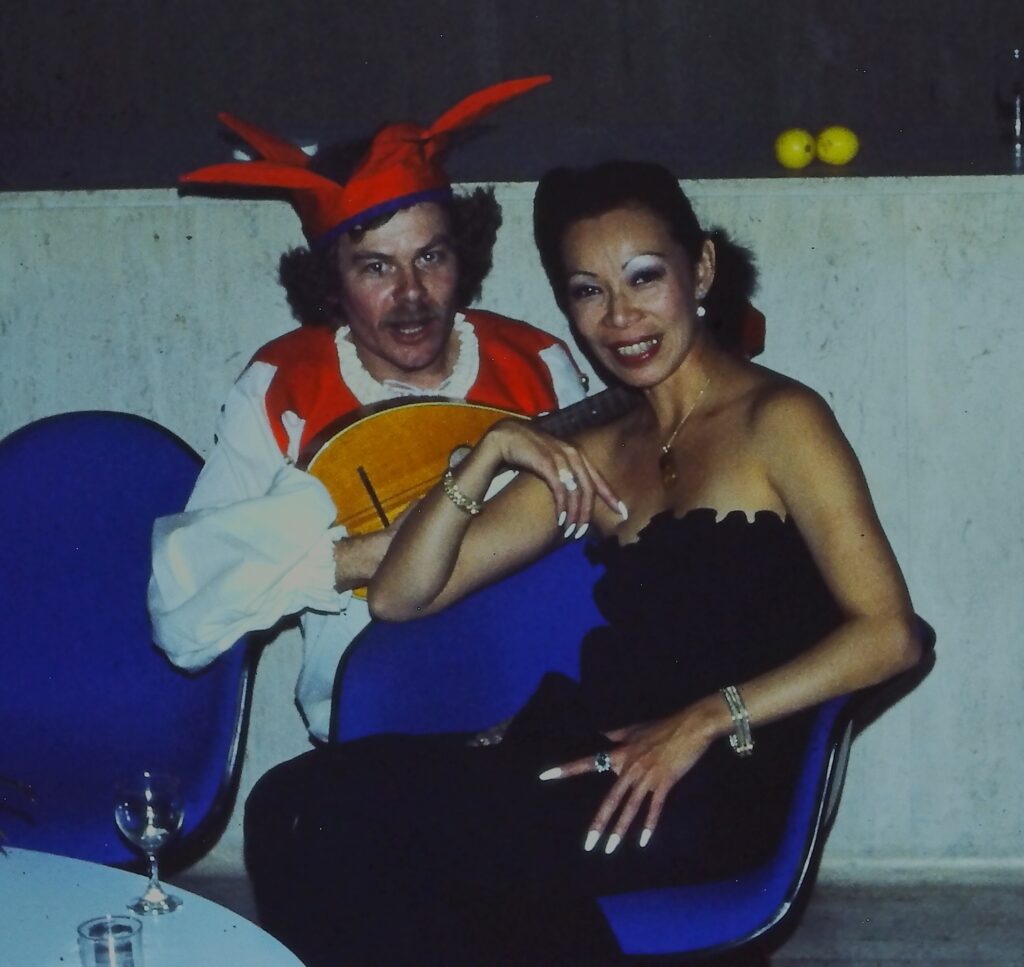
Someone asked me to be the court jester at the Cranbrook Guy Fawkes Ball — a wild, medieval masquerade of fire and costumes and mischievous performance. I said yes without thinking. I wore a ridiculous outfit, improvised pranks, and became, for one night, the living embodiment of creative chaos.
At one point, I even had the distinct honor of informing a member of the Cranbrook high-society set that her exuberantly creative costume had shifted in a way she probably hadn’t intended — in other words, her breast had made a break for daylight. I delivered the message with mock courtly discretion, she adjusted with regal composure, and the absurdity of it all only deepened my role. It wasn’t art exactly, but it was a step toward understanding what performance could do: it could shake you loose.
Then came the skydiving.
I still don’t know what possessed me. Maybe I wanted to test myself. Maybe I wanted to outrun my own confusion. Or maybe I simply wanted to see what falling felt like.
So I drove to a little town called Hell, Michigan, climbed into a plane with a parachute strapped to my back, and jumped.
I still describe the experience as:
three seconds of terror,
three minutes of nirvana,
three weeks of pain.
The terror was the instant the air hit me and my body realized it was no longer attached to the world.
The nirvana was the quiet — the strange, floating silence as the chute bloomed above me and the earth slowed its approach.
The pain came when I forgot the simplest instruction — keep your legs together when you land — and sprained my ankle so badly I limped for weeks.
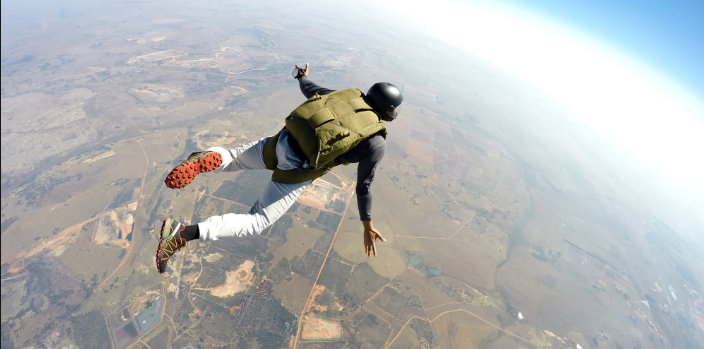
But falling — from a four‑foot drop into my first Cranbrook studio to leaping out of the sky above Hell, Michigan — became the metaphor for everything I was living through.
Falling out of old loves.
Falling into new ones.
Falling through critiques.
Falling into ideas.
Falling from the sky.
Falling into the artist I was meant to become.
And in the middle of all this, I met Shoshana — though that part of the story belongs in what comes next.
The truth is, those two years at Cranbrook were the most vivid of my life. They were my apprenticeship, my awakening, my undoing, and my remaking.
Nothing since has ever felt quite like that combination of fear, revelation, and raw creative urgency.
And every fall — every single one — pushed me toward the man who would one day climb Vertigo at Storm King and understand, at last, what it meant to choose.