Your Choice: Listen or Read
I built the table to look older than it was — the kind of table that might have belonged to a serious household, where people once gathered to read or argue or pray. Around the edge of the tabletop ran a low wooden rail, and just inside that rail was a narrow channel of water, held in place by clear plexiglass. A moat, but a quiet one. Not deep. Just enough to mark a boundary.
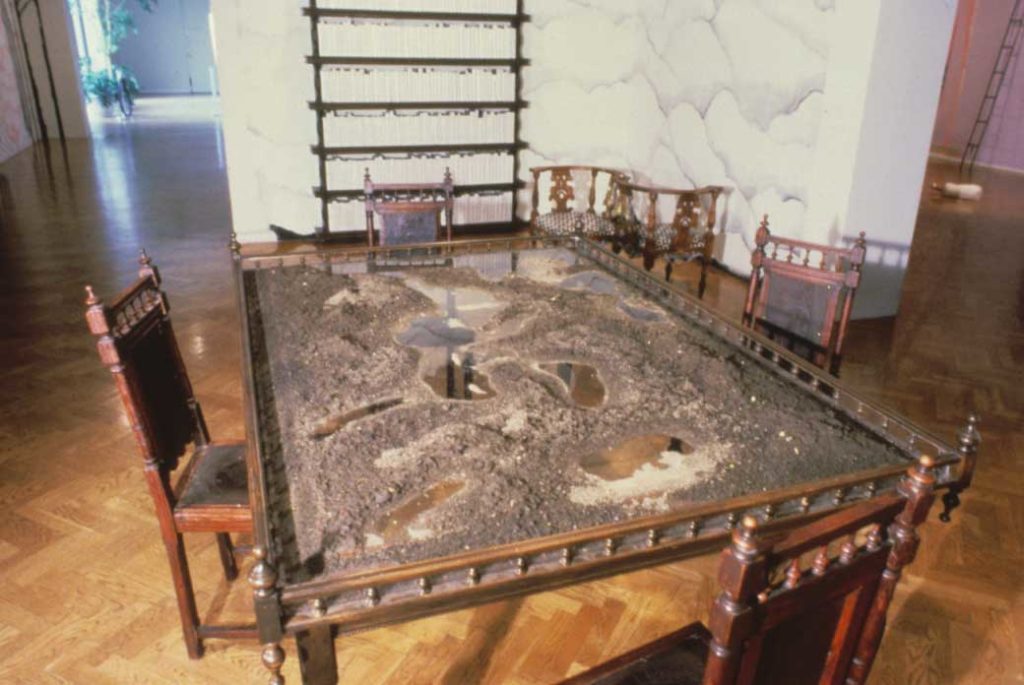
The top surface of the table was glass, and on top of the glass I shaped a landscape: real soil laid out in the form of the Mediterranean Sea basin. Land floating on a pane of glass. A map you didn’t just look at — you shared space with.
Into that landscape I introduced five hundred California Harvester Ants — sometimes called fire ants — capable of biting, known for their relentless industry. The museum required that a sign be placed nearby:
“These Ants Bite.”
And the truth is — they were not under glass. If you reached out your hand, you could touch them.
Their containment wasn’t theatrical. It wasn’t the moat. It was physics. Their bodies couldn’t climb smooth plexiglass — even a one-inch wall of it. I had finally learned how to keep the ants from escaping. That thin, transparent barrier became its own quiet philosophy: not a cage, not punishment — just a limit of form.
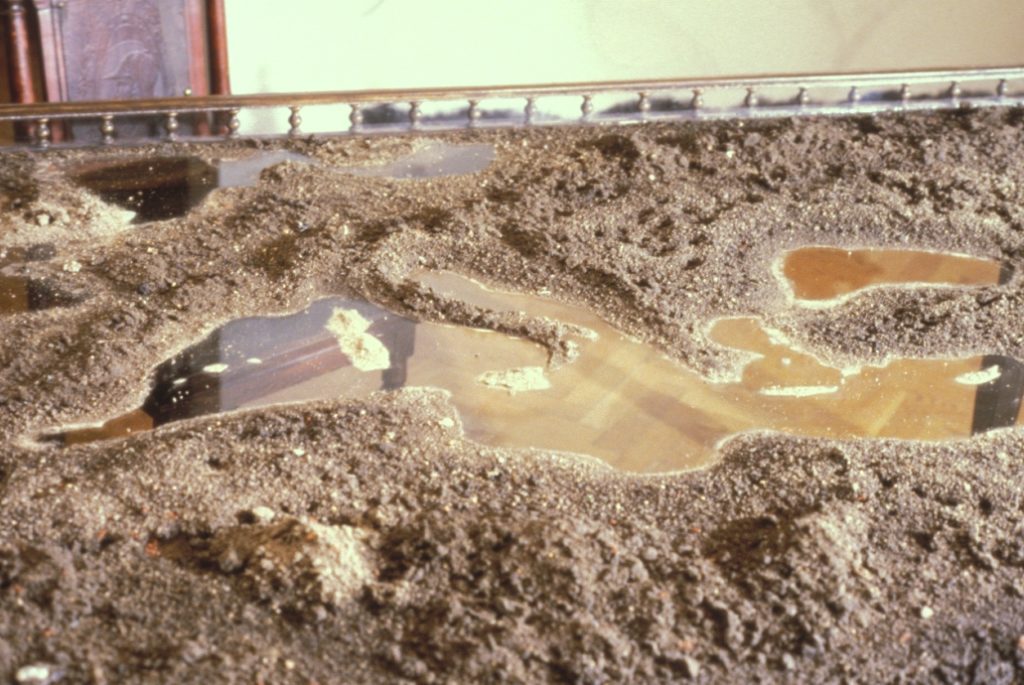
Once the ants arrived, the piece stopped behaving like traditional sculpture. Lines appeared in the soil. Openings broke through. Tiny pathways emerged where there had been smoothness. This wasn’t metaphor acting like life; it was life itself, rearranging the artwork grain by grain.
Because they were alive, the installation required care. I returned to the museum again and again — not just as an exhibiting artist checking on his piece, but as a kind of caretaker. I watched the moisture, the health of the colony, the evolving structure of their movement. The ants had no idea they were in an art museum. They were simply living. In doing so, they quietly insisted that I stay present with them.
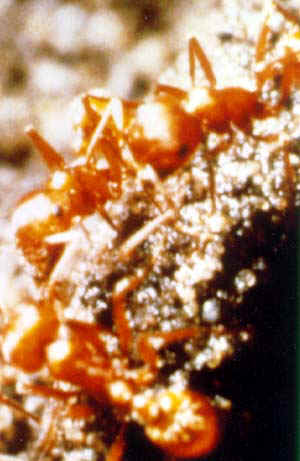
Around the table I placed antique wooden chairs. Not neutral museum furniture, but real chairs with their own histories — the kind that invite you to sit like a guest, not a passerby. People didn’t breeze past. They settled in. They leaned forward and studied the tiny red movements threading across the landscape.
There was a slight charge in the air — the awareness that the ants could bite if you were careless. Not danger as spectacle, but a reminder that any real relationship, even with small creatures, involves risk and responsibility. You weren’t just viewing the piece; you were sharing the room with other lives.
Looking back, I think this was my first fully realized living installation. Not just a sculpture about life, but a situation in which life itself was a collaborator.
The complications — the practical issues, the sensitivities of sharing a space with such a magnetizing work, the mixed reactions from other artists — would surface soon enough. But in that moment, the table sat there like a numinous memory.